Tenebris Somnia how long to beat: Playtime Guide
See Tenebris Somnia how long to beat using launch player reports, ending replay time, and what actually stretches a first clear.
Searching for Tenebris Somnia how long to beat is a practical question, not a trivia hunt. You need to know whether this retro horror night fits after work or needs a free weekend. Tenebris Somnia how long to beat hinges on puzzles, combat retries, and how many endings you chase.
The game from Andrés Borghi and Saibot Studios, published by New Blood Interactive, launched on Steam on October 16, 2026. It is a 2D survival horror adventure stitched with live-action scenes from an Argentine film crew, after nearly four years of development and filming. You play as Julia, checking on her ex, Iván, after brutal nightmares. He is not in the apartment. A strange book on the floor pulls the story somewhere that does not behave like a normal home.
One day after release, there is no large public average. What exists is player experience. A detailed launch review, which disclosed a free review key, says the story took about eight hours, with 8.7 hours on that Steam record. Two other recommended reviews from the same day list 1.1 hours and 1.9 hours. Those shorter clocks match people still in the opening, not a credits roll. A community post also asks how many hours of content exist and whether a replay is worth it. That question was still open on the hub when these notes were collected.
Tenebris Somnia how long to beat from launch reports
Right now, the honest version of Tenebris Somnia how long to beat is one documented clear plus a pair of unfinished sessions. Treat about eight hours as a careful first playthrough, not a median. The reviewer who hit that mark described a slow-burn mystery, more than one ending, and a fake-out boss that raised the stakes. That is an evening that runs long, not a lunch-break indie.
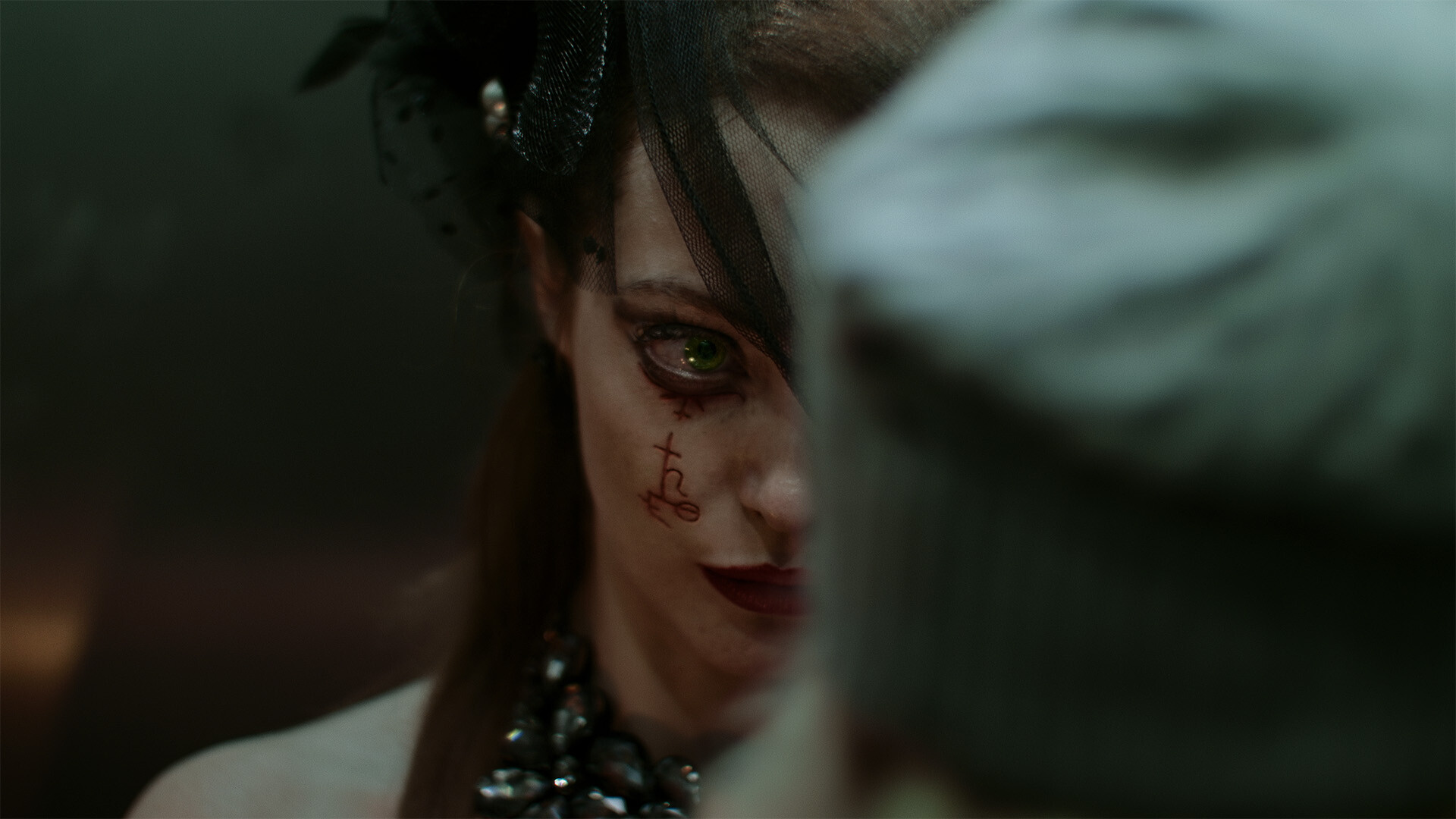
Official screenshot · Source: Steam store
The short reviews still help. They show an opening dense enough that players spend one to two hours before they feel ready to judge the whole game. Community reports include someone still looping the apartment after combining the few items they had found, unsure what came next. Another player praised the filmed scenes and noted that you can fight the first creature. They compared the combat to Silent Hill and Resident Evil, not a pure hide-and-seek game in the Clock Tower mold. Fighting means deaths and reloads can add minutes.
| Report | Time noted | What it represents | How to use it |
|---|---|---|---|
| Detailed launch review | About 8 hours to finish; 8.7 hours on record | One full story clear with exploration | Best current anchor for a first clear |
| Short recommended review | 1.9 hours on record | Early session on launch day | Opening pace, not a full run |
| Short recommended review | 1.1 hours on record | Early session, scenes included | Shows filmed scenes take real time |
| Community question | No number given | Asks about hours and replay value | Confirms players want a range |
If your only goal is a number, Tenebris Somnia how long to beat sits near eight hours for a thorough first story clear, based on that single write-up. Faster puzzle solvers may finish sooner. Anyone who walks the same hallway twice will run longer. On-record time also includes menus, deaths, and pauses, which is why 8.7 hours on a profile can sit next to an “about eight hours” finish. Do not treat either figure as a HowLongToBeat average. A sample that large is not in the public notes from the day after launch.
You can confirm the current build, price, and Deck status on the Tenebris Somnia Steam store page. The store page will not list your personal clear time, but it is the right place to check the launch discount before you block out a night.
What stretches or shortens a first clear
Length here is less about a huge map and more about classic survival-horror friction. Item gates, timed swings, and scenes you should actually watch all move the clock.
Puzzles are the main swing. Community reports from the early floors describe the usual loop: you are holding part of a fetch list, a device is missing its cable, and a tool you need is on a different floor. That is not a reason to open a full solution in the first ten minutes. It is a reason to budget extra time. Players who scrub one room forever will feel stuck. Players who note which floor still has an empty slot usually break the stall faster.
Combat is readable, but it is not free. The same review that logged about eight hours says failed fights came from bad timing more than from broken controls. You ready a weapon, then attack. Panic swings waste health and send you back through a room. A few deaths on a boss, including the reported fake-out fight, can add half an hour without adding new story.
Live-action scenes are part of the runtime. One developer who bundled another game with this title wrote that the filmed scenes are not a break from play. They are how the story asks for your attention. A separate review said those scenes carry meaning through body language rather than spoken lines, which travels across languages and also means a missed visual can send you searching. Plan to watch them. Replaying a short scene is cheaper than brute-forcing the next lock.
Smaller drags show up in player experience too. One reviewer snagged on level geometry and blamed their own movement more than a bug. Some puzzles depend on color, and others on hearing pitch. If those cues are hard for you, the design is still intentional, but your clear will run long. Headphones and a quick color note are practical, not optional flavor.
| Factor | Effect on a first clear | What players actually report |
|---|---|---|
| Puzzle backtracking | Largest swing | Multi-floor item hunts in the early building |
| Combat retries | Moderate | Timing-based attacks, not a passive stalk |
| Live-action scenes | Fixed cost you should not skip | Long enough that players comment on them directly |
| Color or sound puzzles | Small for most, large if those cues are hard | Called out as a real access limit |
| Menus and movement | Usually small | Inventory auto-sorts; occasional snags on geometry |
Official community posts describe a 2D retro survival horror adventure where you solve puzzles and fight horrible creatures, then ask what happens if the nightmares are not only nightmares. That is story-forward horror. It is not an endless roguelike, and it is not a 30-hour action RPG.
Main story, extra endings, and replay hours
A first clear and a full clear spend your time differently. The eight-hour player experience is the best public marker for seeing the mystery through once. That write-up says there are multiple endings. Community videos go further and title their guides around four endings, including a no-commentary full-game walkthrough. Until the developer posts an official count, treat “four” as a community report and “more than one” as the safer written claim.
Replay value is the half of the hub question that never got a direct reply. Puzzle games shrink hard on a second pass. Once you know which floor holds the missing tool, a loop that ate 40 minutes becomes a short walk. Combat routes get cleaner too. A second story run, aimed at another ending, should land well under that first eight-hour clock if you are not hunting every achievement.
Completionists should expect a longer tail. Community reports note achievements for defeating certain enemies or for dying to them, while players say the creatures’ names are not clearly listed in-game. If you cannot tell which foe matches which goal, you either experiment or follow a spoiler guide. That time sits on top of the story, and it is uneven. Some players will hit the requirements by accident. Others will replay chapters on purpose.
| Goal | Planning budget | Confidence | Notes |
|---|---|---|---|
| Learn the opening | 1–2 hours | Fair | Matches two launch-day records |
| One story ending | About 8 hours | Single report | Only detailed clear time available |
| Faster second ending | Notably under the first clear | Estimate | Known routes remove most backtracking |
| All community-reported endings | Several sessions | Low sample | Videos refer to 4 endings; the review says multiple |
| Achievement cleanup | Open-ended | Community only | Enemy goals lack an in-game name list |
Use the table as a calendar. Block one weekend day if you hate stopping mid-puzzle. Split the game into three evenings of roughly three hours if you want sleep between the nastier floors. Do not block a “quick two-hour 100 percent” night. Nothing in the launch reports supports that.
Players asking Tenebris Somnia how long to beat for a full ending set should assume the first run teaches the building and later runs spend that lesson. A guided replay will be shorter than a blind one. A blind hunt for every branch will run longer than eight hours in total, even if no single path hits eight hours again.
Practical ways to keep your playtime on track
You can respect the horror and still stop the clock from exploding. These habits come from how the game is built and from where launch players got stuck.
- Write down odd items when you pick them up. The inventory auto-sorts by type, so puzzle keys stay easier to spot, but it will not tell you which floor still needs them.
- When a room feels empty, change floors before you loop the same hallway again. Early community posts describe that exact trap.
- Fight on purpose. This is not a game where the only plan is to run forever. Ready the weapon, watch the motion, then commit. Reckless swings turn a short hall into a reload.
- If you use a controller, set run to a toggle. Player experience with an Xbox-style layout puts interact and run on face buttons, item and book swaps on the bumpers, and ready-and-strike on the triggers. Less fumbling means less clock.
- Use headphones for any puzzle that seems to care about sound. Color puzzles need a real look, not a glance.
- Watch each live-action beat once, closely. Nobody spells the plot out in dialogue, so the staging is the hint.
- Save the “one more room” impulse for a real breakpoint. The eight-hour review noted that the next puzzle always feels like the last of the night, and then another hour disappears.
| Habit | Time you often get back | When it matters most |
|---|---|---|
| Change floors when stuck | Often 15–40 minutes per stall | Early building, multi-item gates |
| Toggle run and learn the triggers | A few minutes every fight | Any combat floor |
| Headphones plus a color note | Prevents a full repeat of a sensory puzzle | Middle and late puzzles |
| Watch each scene once, closely | Avoids redoing a whole section | Story locks after cutscenes |
| Separate story night from achievement night | Keeps the first clear near the reported 8 hours | After credits |
A puzzle-and-boss guide is already on the community hub if you are truly blocked, and those posts warn that they spoil. Spend your own time first. Look something up only after a stall stops being fun. That single rule keeps a blind clear close to the eight-hour player experience instead of turning it into a transcript.
Price, sessions, and whether the length feels fair
Time is only half of the decision. Ahead of launch, the list price was set at $24.99, with a 20 percent launch-window cut to $19.99. Owners of FAITH: The Unholy Trinity were promised an extra discount. The publisher also described sharper regional prices, especially in Latin America, plus a bundle tied to FAITH. Console pricing was framed as something they would try to keep close, not as a figure locked in these notes.
At the $19.99 launch price, an eight-hour first clear is about $2.50 an hour before any FAITH discount or regional cut. That is an illustration using one player’s hours, not a promise that your file will read 8.0. A second ending improves the ratio because you are not buying the game again. If the apartment loop bounces you in the first hour, the ratio does not matter. The demo was updated before launch, and that is the cheaper way to test whether the pace feels stuck or just right.
The game is Rated M in the United States, and the publisher advised discretion. Do not plan it as background noise in a family room. Steam Deck verification is official, so those hours do not have to happen at a desk. A couch session works as long as you can hear the audio cues.
| Session plan | Clock | Fits the game if you… |
|---|---|---|
| One weekend afternoon | About 8 hours | Want the story in a single focused run |
| Three weeknights | About 2.5–3 hours each | Need breaks between puzzle blocks |
| Deck in short bursts | 30–60 minutes | Accept that a burst may end mid-puzzle |
| Replay night | Shorter than the first clear | Already know the item routes |
| Sale-price check | About 10 minutes | Compare the $19.99 launch price in your region |
Launch chatter already splits. Some players felt bored while looping the first rooms and asked if the whole game felt that way. Others called it a real survival-horror win and stayed for most of a day. Both reactions can be true in the first 24 hours. The length is closer to a classic survival-horror campaign than to a short vignette. What makes it feel brief or endless is whether the next key is already in your pocket.
FAQ
Tenebris Somnia how long to beat on a first playthrough?
Player experience from a detailed launch review puts a full story clear at about eight hours, with 8.7 hours on record. That is one careful run, not a global average. Expect the total to move if you solve puzzles quickly or die often in fights.
How long does it take to see every ending?
A written review confirms multiple endings. Community videos refer to four. Your first path is the long one. Later paths should be shorter once item routes are familiar, so a full set is several sessions rather than four repeats of that eight-hour clock.
Is the game only an hour or two long?
No. The 1.1-hour and 1.9-hour Steam reviews from launch day are early sessions. They help you judge the opening, not the credits. People still asking about total content on day one is another sign this is not a tiny novelty.
Will getting stuck make Tenebris Somnia how long to beat much longer?
Yes. Community reports show players looping floors while holding the wrong half of a puzzle. One stall can eat a large slice of an evening. Changing floors, noting item gaps, and only then opening a spoiler guide will keep the extra time under control.
Related Guides
Tenebris Somnia demo walkthrough: every puzzle step
Tenebris Somnia demo walkthrough for the free Steam and Xbox slice: chemical door, wrench fights, and the shifting apartment.
Tenebris Somnia guide: Walkthrough Roadmap
A Tenebris Somnia guide to the four-part path: floors, three film canisters, the ritual, and the Desiderium ending.
Tenebris Somnia puzzles: Unstuck Without Spoilers
Learn how to clear Tenebris Somnia puzzles using a room checklist, spoiler control, and the pinned Steam guide.
Tenebris Somnia Demo Guide: Platforms and Story
Learn what the Tenebris Somnia demo includes on Xbox and PC, from platforms and age rating to a practical first-session plan.
Tenebris Somnia gog: Price, Demo, and DRM Guide
Tenebris Somnia on GOG is $19.99 (20% off) through Oct 30, 2026. Compare the free demo, DRM-free specs, languages, and early reviews.