Tenebris Somnia Steam Deck: Verified Handheld Guide
Tenebris Somnia Steam Deck is Verified. Launch price, controls, runtime, and handheld tips for New Blood's retro horror.
Handheld horror just picked up a clear answer for portable players. If you have been waiting to see whether Tenebris Somnia Steam Deck support is a real badge or a hopeful comment, the publisher has already settled it: the game is Verified, and it even includes a Deck startup video. That matters because Tenebris Somnia Steam Deck sessions are built for a controller, not a desk full of peripherals.
The game launched on October 16, 2026, after nearly four years of development and live-action filming. It is a 2D retro survival horror adventure with puzzles, timed combat, and full-motion video from an Argentine film crew. On a handheld, that mix is the whole pitch: short bursts of exploration, then a cutscene that asks you to watch closely.
This guide sticks to what the Steam community hub, the publisher’s own posts, and early player experience actually show. It does not invent frame rates or battery life. Those numbers were not published in the source material available the day after launch.
Why the Verified Badge Matters
Steam Deck Verified is Valve’s strongest compatibility tier. In plain terms, a Verified game is expected to run with a gamepad, show readable text at the default settings, and avoid the usual “you must use a mouse for this launcher” traps. Patches can change a report later, so the store page is still the source of truth after you buy.
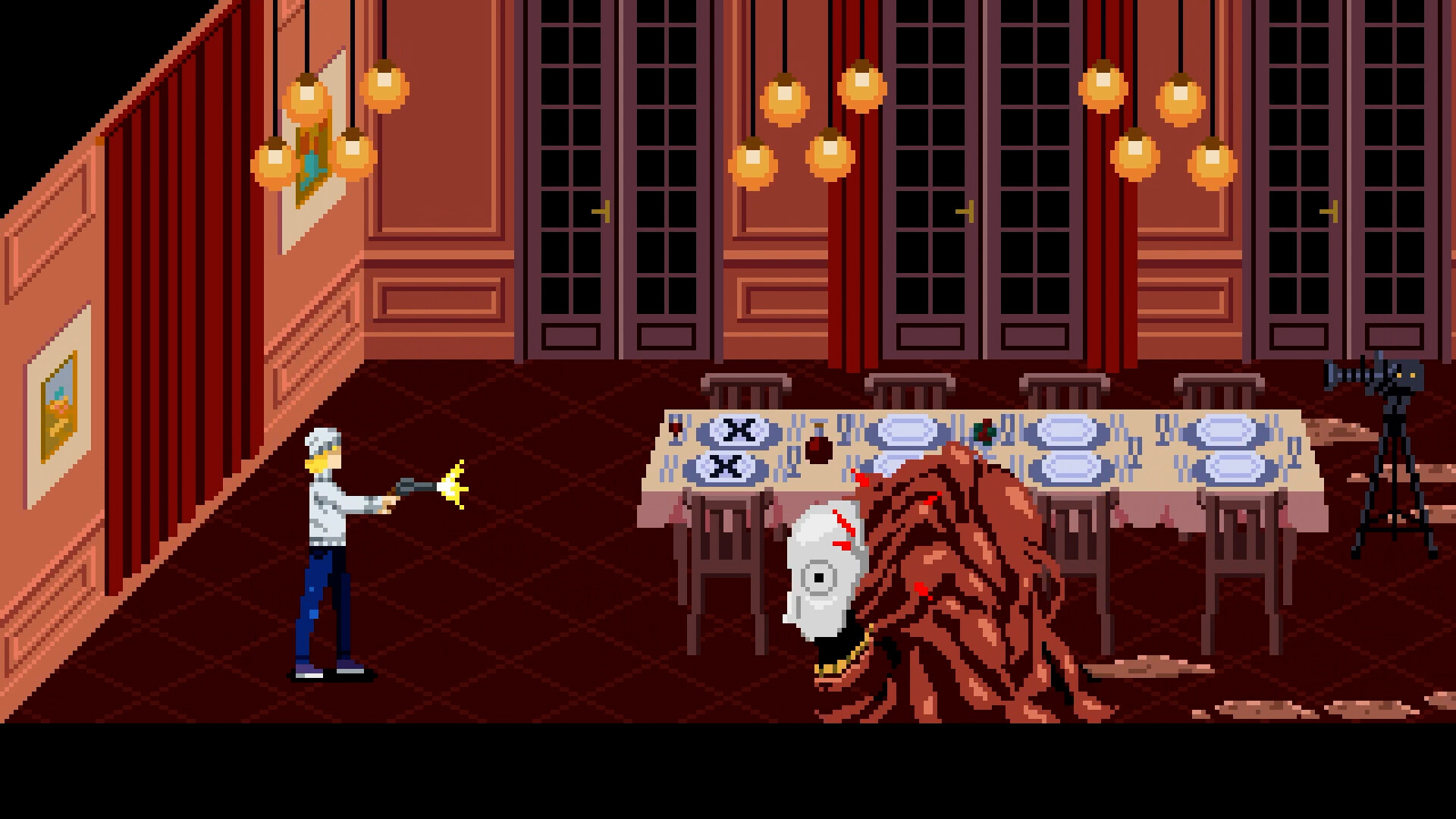
Official screenshot · Source: Steam store
New Blood did not leave the status as a quiet checkmark. In the launch post on the community hub, the team called out a Steam Deck startup video specifically because the game is Verified. That is a small thing, but it signals the handheld was part of the release plan, not an afterthought.
For a puzzle-heavy horror game, the practical upside is simple. You can suspend a session when a lock stops making sense, pick the device back up, and keep the same button layout you would use on a couch controller. You do not need a keyboard overlay for ordinary play.
| Deck question | What is confirmed | What you should still check |
|---|---|---|
| Is it Verified? | Yes. Publisher stated Deck Verified and shipped a startup video | Open the store compatibility panel after any patch |
| Gamepad support? | Full controller play is part of the design; a launch review used an Xbox layout the whole way | Stick with the default gamepad template unless a patch note says otherwise |
| Performance numbers? | Not published in the hub material used here | Read Valve’s report for graphics and display notes |
| Cloud saves or Proton details? | Not stated in this source | Confirm on the store page before you rely on them |
| Launcher friction? | Verified status implies a clean controller path | Re-check if a future update adds a launcher |
If the green check is the reason you are buying, look at the official listing on the Tenebris Somnia page on Steam before checkout. Compatibility notes live there, and they can be more specific than a community announcement.
What You Are Playing
Tenebris Somnia is a retro survival horror game developed by Andrés Borghi with Saibot Studios and published by New Blood Interactive. Executive producer Airdorf, known for FAITH, and New Blood CEO Dave Oshry discussed the project with PC Gamer around Tokyo Game Show. The hook on the store description is blunt: solve puzzles, fight horrible creatures, and ask whether the nightmares are only nightmares.
You play as Julia, who goes to check on her ex, Iván, after gruesome dreams about him. He is not in the apartment. A strange book on the floor pulls the story somewhere else. A detailed launch review described the rest as a slow-burn mystery with more than one ending, including a fake-out boss that raises the stakes. Community videos on the hub refer to four endings, which is the best public replay signal so far.
The presentation is the unusual part. Live-action scenes from an award-winning Argentine crew play when story events trigger. Player experience from a long launch review says those scenes do not use spoken dialogue. Body language and context carry the moment, which also helps the story cross languages. The same write-up called the cutscenes part of the game rather than a garnish: you are supposed to pay attention, not skip past them.
Combat is not a pure hide-and-seek design. One early recommended review put it next to classic Silent Hill and Resident Evil rather than Clock Tower. You can fight the creatures. Timing matters more than button mashing. Enemy designs are distorted to match the spaces Julia has to cross, and sound, music, and silence do a lot of the mood work.
The game is rated Mature in the United States. The publisher posted regional rating art as well and told players to use discretion. This is not a light spooky puzzle box.
Controls That Map Cleanly to a Handheld
A thorough launch review, written after a controller-only playthrough of about 8.7 hours, is the clearest control map available. The reviewer used an Xbox layout and called the inputs standard and responsive. Steam Deck face buttons and triggers follow that same layout, so you should not need a custom bind for a normal run.
| Action | Reported control | On Steam Deck |
|---|---|---|
| Interact | A | A |
| Run | X, with a toggle option in the menu | X |
| Open inventory | B | B |
| Switch between items and the book | LB and RB | L1 and R1 |
| Ready a weapon, then attack | LT to ready, RT to attack | L2, then R2 |
Mouse and keyboard also work. On a handheld, the controller path is the one that matches the Verified badge. The reviewer’s failed fights were blamed on impatience, not on unresponsive inputs. Treat that as one player’s experience, not a lab test, but it is the most specific control report from launch day.
Inventory behavior helps on a small screen. Items sort themselves by type when you pick them up, so puzzle objects stay easier to find than in a classic grid you have to rearrange by hand. That matters when you are flipping between a weapon and a key item with shoulder buttons instead of a mouse.
Two accessibility notes from that same review are worth planning around. Some puzzles depend on color. Others depend on hearing pitch or intonation. Both are described as well designed, and both will lock out some players. Headphones are the practical Deck fix for the audio puzzles. For color, play somewhere you can see the panel clearly, and raise brightness before you assume a puzzle is broken.
A minor gripe in that review was getting stuck on level geometry. The writer thought it was user error. There is no community report in this material that frames it as a Deck-only bug. If movement feels snagged, try a slightly different angle before you blame the device.
Price, Length, and Early Player Reports
The list price is $24.99. During the launch window the publisher applied a 20 percent discount, which brings it to $19.99. Owners of FAITH: The Unholy Trinity get an additional discount. The exact extra cut was not printed as a number in the hub post, so confirm it on the store. Regional pricing was described as aggressive, especially in Latin America. Trading cards, Steam Points shop items, an updated demo, and a FAITH bundle were all part of the launch pitch.
A day-after community snapshot is not a review score, but it shows people were actually in the game. The hub listed 816 in-game when this material was collected. Treat that as a moment-in-time count, not a sales total.
| Signal | Figure | How to read it |
|---|---|---|
| List price | $24.99 | Standard USD price |
| Launch discount | 20 percent, or $19.99 | Launch-window pricing; it will not last forever |
| FAITH owners | Extra discount, amount not specified here | Check the store while logged in |
| Long launch review | About 8 hours, 8.7 hours on record | One full-feeling playthrough, review key disclosed |
| Same-day short reviews | About 1.1 and 1.9 hours | People who had just started, not finished runs |
| Endings | Four, per community videos | Replay hook; not a developer hour estimate |
| In-game snapshot | 816 | Hub count the day after launch only |
Nobody from the studio posted an official campaign length in the material used here. A player asked the hub how many hours were in the game and whether it was replayable. That question was still fresh. The useful comparison is the spread in the table: two recommended reviews under two hours are opening impressions, while the eight-hour write-up is someone who finished a substantial path and mentioned multiple endings.
Replay value, based on what is public, sits in those endings and in achievement chasing, not in a scored arcade mode. Community reports already note a friction point for achievement hunters. Several goals refer to defeating or being killed by named enemies, but players say the names are not clearly listed in the game. If you care about a clean achievement pass, expect to use a spoiler-tagged guide after a blind run.
Not every early reaction is glowing. One player, experienced with PlayStation-era survival horror, felt stuck circling the apartment after combining a glass with a chemical from the fridge and wondered if the whole game was aimless backtracking. That is a fair genre warning. The opening is opaque on purpose. On a handheld, opaque can feel like a bug because you cannot easily alt-tab a map. It usually means an interaction is still unused.
Another hub thread asked for a nudge on an early floor, citing black tape, a charger missing a cable, a table missing a plate, and a screwdriver needed later. Those are puzzle threads, not performance complaints. A community puzzle and boss guide is already up, and it is marked with a spoiler warning. Use it when you are actually blocked, not as a first stop, or the FMV mystery will collapse.
How to Set Up a Good Handheld Session
Tenebris Somnia Steam Deck play rewards a few habits more than it rewards tinkering. You are not tuning a giant open world. You are keeping text readable, audio clear, and your place in a puzzle obvious.
- Buy or launch only after you see the current Verified note on the store. The publisher’s checkmark is real, and patches can still add a footnote.
- Leave the control layout on the standard gamepad template. Run can be set to toggle in the options, which is kinder on a long grip than holding a face button.
- Use headphones once the story leaves the apartment. Intonation puzzles and the quiet stretches of the soundtrack both lose detail through small speakers.
- Sit where the screen is not washed out if a puzzle uses color. Deck brightness helps, direct sun does not.
- Suspend when you are stuck instead of forcing a random item on every hotspot. The design expects you to leave and come back with new information.
- Keep the first run blind. Community videos already cover all four endings and a full no-commentary walkthrough. Those will solve the mystery for you.
- Save achievement cleanup for a later pass. Enemy names are a known community complaint, and guides on the hub spoil bosses.
- Do not treat a confusing first hour as a Deck fault. The stuck-in-the-apartment report is about puzzle design, and it showed up from a desktop-style player too.
A sensible first session is the opening through the first real combat encounter, not a rush to credits. That is enough to judge whether the FMV style works for you. The updated demo is still available if you want a smaller sample before paying, though the launch build is the one carrying the Verified startup video.
| Session goal | Suggested approach | Stop if |
|---|---|---|
| Taste the tone | Updated demo, or the first apartment stretch | The lack of direction feels tedious rather than tense |
| Learn the fights | Controller, weapons readied with the left trigger | Inputs feel late only after you have practiced the timing |
| Finish one ending | Blind play, headphones, suspend on hard puzzles | You are tempted to open the four-ending video |
| Clean up extras | Spoiler guide for bosses, enemies, and endings | You still want the story surprises intact |
Tenebris Somnia Steam Deck owners who already like New Blood’s catalog get one more store lever: the FAITH bundle and the owner discount. Those are pricing perks, not gameplay changes. They do not alter the Verified status either way.
FAQ
Is Tenebris Somnia Steam Deck Verified?
Yes. The publisher said the game is Deck Verified and released a Steam Deck startup video for that reason. Still open the store compatibility section after updates, because Valve’s report can gain notes later.
How long does a playthrough take?
There is no official length. One detailed launch review took roughly eight hours. Same-day reviews around one to two hours are early impressions. Community videos describe four endings, so a single path is not the whole game.
Can you fight, or do you only run?
Player experience from launch reviews says you can fight. It plays closer to classic survival horror combat than to a pure evasion game. You ready a weapon and attack with the triggers, and enemy timing matters.
Will puzzles work well on a small screen?
Most of the loop is built for a controller: interact, inventory, and a book you cycle with the shoulder buttons. The exceptions are puzzles that need color vision or the ability to hear pitch. Headphones and a clear view of the screen cover the practical side. They will not fix every accessibility limit.
Related Guides
Tenebris Somnia gog: Price, Demo, and DRM Guide
Tenebris Somnia on GOG is $19.99 (20% off) through Oct 30, 2026. Compare the free demo, DRM-free specs, languages, and early reviews.
Tenebris Somnia ps5: Price, Ratings, and Buyer's Guide
See the Tenebris Somnia ps5 price, PS Plus deadline, ESRB Mature rating, early 4.77 score, and digital vs disc differences.
Tenebris Somnia steam: Price, Deck, and What to Know
Tenebris Somnia steam guide to the $19.99 launch price, Mature rating, Deck Verified status, FAITH perks, and day-one player reports.
Tenebris Somnia guide: Walkthrough Roadmap
A Tenebris Somnia guide to the four-part path: floors, three film canisters, the ritual, and the Desiderium ending.
Tenebris Somnia Demo Guide: Platforms and Story
Learn what the Tenebris Somnia demo includes on Xbox and PC, from platforms and age rating to a practical first-session plan.