Tenebris Somnia switch: Handheld Horror Worth Playing
Decide if Tenebris Somnia switch fits handheld horror: pixels, live-action cuts, map size, and who should buy.
Why This Handheld Listing Is Worth a Closer Look
Horror fans shopping for a portable scare have a strange new option. Tenebris Somnia switch is the Nintendo listing for a side-scrolling survival horror game that looks like a lost 1980s computer adventure, then rips you into full live-action film. That contrast is why Tenebris Somnia switch matters on a handheld: short sessions, a constrained map, and story beats that hit harder on a small screen in a dark room than they do as background noise on a desk.
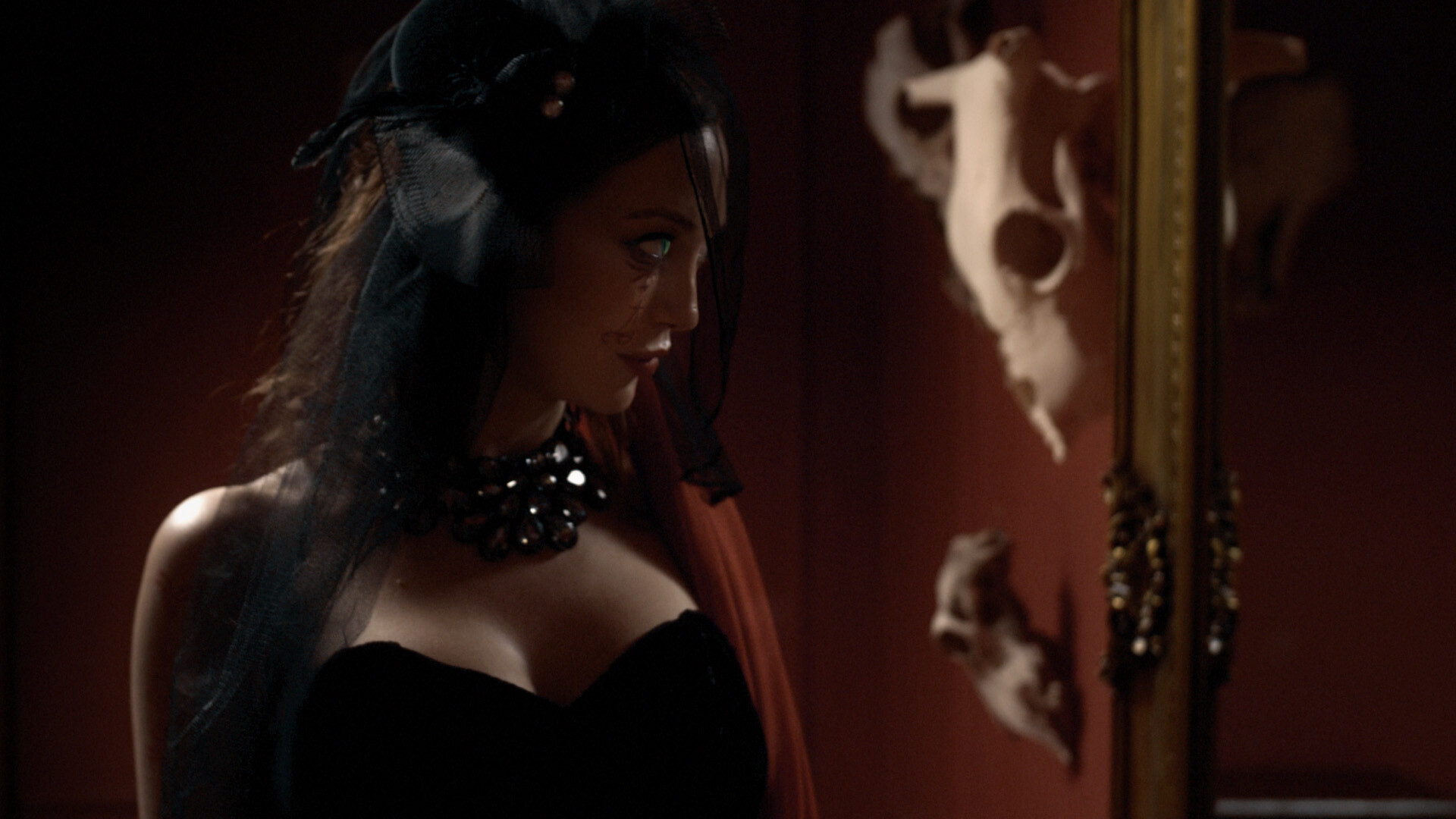
Official screenshot · Source: Steam store
A crowded horror season makes the choice harder, not easier. Spectacle competes with niche experiments, and not every experiment survives a commute or a low-battery evening. This one leans on exploration and puzzles more than on twitch combat, which is the kind of loop that can work in bursts if the map does not swallow your week.
The US product page asks you to confirm your age before the full listing appears. Treat that gate as a content warning, then read the live price, rating, and download size there. Recaps go stale. The official Nintendo Switch store page for Tenebris Somnia is the record that can still change.
Pixels, Live Action, and the Real Map Size
A crude game that cuts to real film
The playable world uses a very old adventure-game look: blocky, limited, and proudly out of date. Player experience from a long comparison describes an Atari-era aesthetic, not a modern pixel-art showcase with expensive lighting. Gameplay stays inside that rough frame. Fully produced live-action scenes then tear you out of it.
That rip is the feature people remember. High-definition footage, makeup, and digital effects sit beside an 8-bit corridor, and the mismatch is intentional. The same player experience suggested showing the game to someone who has not been briefed, because the first stylistic switch is the trick. Docked on a television, the filmed image has more room. In handheld mode, the pixels stay readable and the sudden human faces feel closer.
Horror does not need modern shaders to work. That playthrough called out scares that landed inside the crude graphics, not only in the filmed scenes. If you buy retro games only for cozy vibes, adjust your expectations. This is survival horror wearing a museum computer's clothes.
Backtracking that stays in two main places
A metroidvania is one big connected map. You leave a door locked, find a key or tool, and walk back. Classic survival horror often does the same thing inside a single level, such as a mansion or an apartment block, then moves on. You are not usually weaving every earlier street into the next hour. A short amusement-park horror can feel maze-like without becoming a true genre epic.
Player experience puts this game on the metroidvania side, but only partly. There is one interconnected map and plenty of return trips. The core is an apartment building and a university. Other spaces appear, yet those two locations do the heavy lifting. That is a smaller promise than a castle of ability gates.
Reported length in that playthrough was about eight hours. The figure is one person's pace, not an official clock. It is still a useful planning number. Eight hours is a weekend, or a week of evening sessions, not a season-long save file.
| Detail | What you can treat as solid | What is still unconfirmed |
|---|---|---|
| Look | 1980s-style pixels during play | Exact resolution on handheld vs docked |
| Hook | Full live-action cutscenes | How many scenes, and how long each runs |
| Structure | Connected map, heavy backtracking | Official map tools or hint frequency |
| Main spaces | Apartments and a university, plus other areas | Full area list |
| Length | About 8 hours in one player experience | Any developer-stated time |
| Puzzles | Point-and-click logic, riddles, physical puzzles | Difficulty options |
| Store facts | Age-gated Nintendo US listing | Price, rating letter, and file size |
Side by Side With Silver Pines
The same player experience set the game beside Silver Pines, another side-scrolling survival horror title built on exploration, puzzles, and a strong visual idea. They are not twins. By that account, Silver Pines mixes 3D and 2D art with a huge stack of hand-drawn frames, including well over a thousand for the lead alone. Community reports cited there put it nearer 16 hours, and the reviewer saw overwhelmingly positive Steam sentiment.
Story pace differed in practice. After a couple of days, that playthrough still framed Silver Pines as a private investigator searching for a musician, with a missing person and a trail of notes. The shorter game revealed a personal crisis faster: a woman trying to save an ex-partner from a demonic phenomenon, with the relationship filled in through photos, movie props, dialogue, and filmed scenes.
Combat contrasts were listed without a clean assignment. Breakable weapons, limited inventory, purchasable supplies, scarce saves, and a stamina dodge were mentioned as differences between the two games, not as a labeled kit for either one. Do not treat any of those systems as a confirmed feature here.
| Point of comparison | This game | Silver Pines (player experience) |
|---|---|---|
| Look | Computer-era pixels plus live-action film | Mixed 3D/2D and extensive hand-drawn animation |
| Map feel | Bounded loop, mainly apartments and a campus | Larger world and heavier backtracking |
| Reported length | About 8 hours in one playthrough | About 16 hours in community reports |
| Story delivery | Relationship details arrive early, then spike on film | Slower clues; reviewer still unsure after days |
| Puzzle note | Riddles and physical solutions strongly praised | Puzzles praised, plus secret hunting |
| Fatigue risk | Lower, if you dislike giant maps | Higher for players who burn out on backtracking |
| Broad verdict | Recommended | Recommended, if you have the patience |
The reviewer liked the tighter game more, while still calling Silver Pines an outstanding survival-horror effort and blaming personal map fatigue rather than quality. That split is the buying advice. If you love getting lost, the longer project is the passion purchase. If you want dread you can finish before the mood fades, the smaller loop is the practical win, and it is the one attached to the Tenebris Somnia switch listing.
Sessions, Puzzles, and Portable Habits
Expect an adventure-game brain inside a horror body. Player experience describes point-and-click thinking: riddles, physical puzzles, and solutions that feel authored rather than copied from a key-card checklist. On a portable system, that style punishes playing half-asleep. A missed comment means another lap of the same hall.
The story advantage, in that playthrough, was speed of attachment rather than a claim of a better plot. Photos and props do quiet setup. Dialogue and live-action scenes deliver the blow. Fast emotional clarity helps on Switch, where you may close the system mid-chapter and need a reason to open it again tomorrow.
| Beat | What the session feels like | Handheld habit |
|---|---|---|
| Prop comments | Short notes on photos or set dressing | Read them before you leave the room |
| Dialogue | Bigger chunks of relationship context | Save these for a quiet seat |
| Live-action | Hard cut from pixels to filmed horror | Headphones on; lights down if you can |
| 8-bit scares | Dread without realistic graphics | Do not assume retro means mild |
| Return trips | Old doors open with new information | Keep a one-line note of locked spots |
No source here documents an official quest log, shimmer on every item, or how generous the in-game map is. Assume you are supposed to remember doors, the way older adventure games expected. That memory load is part of the pleasure and part of the risk.
Use the eight-hour player-experience figure as a planning ceiling, not a speedrun target. A simple week looks like this:
- Night one: learn the apartment routes and stop after the first live-action break so the shock stays sharp.
- Night two: reach the university side and mark every path that loops backward.
- Midweek: clear a puzzle cluster in one sitting so you do not relearn a riddle three days later.
- Weekend: finish the remaining locks while the story is still warm.
| Choice | Better Switch setup | Why it matters |
|---|---|---|
| First filmed scene | Docked, or handheld with headphones | The image is the surprise |
| Puzzle rooms | Handheld, somewhere quiet | Logic fails in a noisy queue |
| Long backtrack | One planned loop | Fewer repeats of the same halls |
| Showing friends | Their first session, unspoiled | Player experience treats the stylistic switch as the demo |
| Purchase check | Age-gated eShop page | Rating, price, and size are store facts |
A few habits do not depend on unconfirmed menus. Check free storage before you download, because filmed video can weigh more than pixels and only the store page knows the number. Drop brightness a notch from your usual handheld preset so dark rooms stay dark. If a puzzle stalls, reread earlier prop comments before you open a guide that will spoil a filmed beat. And do not judge the whole game from one screenshot. A pixel still hides the film, and an actor still hides how crude the gameplay looks on purpose.
Players who bounced off Super Metroid or Blasphemous because the map itself caused anxiety may still be fine here. The same reviewer stalled on those larger designs, and on Silver Pines, yet stayed with this one because the apartment-and-campus loop felt finite. That is the strongest platform case for Tenebris Somnia switch. It asks for attention, then it ends.
Who Should Buy, Skip, or Wait
Buy if you want survival horror that behaves like an adventure game, you enjoy being unsettled by a style clash, and you would rather finish a scary story than colonize a map. Handheld play favors the pixels and the short sessions. Docked play favors the filmed footage. Either mode fits if the current Tenebris Somnia switch page in your region actually offers the game.
Skip or wait if you need a confirmed combat list, a photo mode, or modern comfort features spelled out in advance. Those details were not in the age-gated store capture or cleanly assigned in the comparison. Also skip if crude graphics feel like a broken promise. The live-action does not replace the pixels. The pixels are the other half of the threat.
| You want | Lean this way | Reason |
|---|---|---|
| Evenings you can actually finish | This Switch listing | Reported length near 8 hours and a bounded map |
| A huge ability-gated world | Silver Pines first | Larger reported map and more backtracking |
| Hand-drawn animation density | Silver Pines | Frame-heavy presentation, per player experience |
| Pixels smashed against real film | This game | Live-action is the headline device |
| A slow note-driven mystery | Silver Pines | Story stayed opaque for days in that playthrough |
| A systems spec sheet before paying | Wait | Saves, inventory, and combat were not pinned down |
Both games got a full recommendation in that player experience. Picking this one is about fit, not about declaring a loser. A brilliant 16-hour maze is a bad buy if huge maps make you quit. A weird eight-hour hybrid is a bad buy if you wanted glossy action.
Nothing here confirms a physical card, a permanent sale price, cross-save, or a bundle. Regional storefronts can also differ. If the US page is unavailable on your account, search Tenebris Somnia switch from your own Nintendo account instead of assuming the same offer.
FAQ
Is Tenebris Somnia switch a standard metroidvania?
It uses one connected map and steady backtracking, which is the metroidvania idea. Player experience still describes a constrained core: an apartment building and a university, with other spaces around them. Think dense survival-horror complex, not a kingdom of ability gates.
How long does a playthrough take?
One detailed player experience put it around eight hours. That is not an official timing, and puzzle lingering will move it. It remains short enough to plan as a weekend on a portable system, especially if you stop after major story beats instead of grinding optional loops you have not confirmed exist.
Will the retro graphics make the horror mild?
No. That playthrough highlighted scares inside the 8-bit scenes and full-production live-action meant to jar you. Retro is a style weapon here, not a softness setting. Read the age rating on the store page before you buy for a shared household.
Where should I confirm price and rating?
Use Nintendo's listing. The captured page stops at an age check, so this article does not lock a price or a rating letter. Open the store record for Tenebris Somnia switch, verify your age, and read the current rating, file size, and purchase options there before you pay.
Related Guides
Tenebris Somnia gog: Price, Demo, and DRM Guide
Tenebris Somnia on GOG is $19.99 (20% off) through Oct 30, 2026. Compare the free demo, DRM-free specs, languages, and early reviews.
Tenebris Somnia ps5: Price, Ratings, and Buyer's Guide
See the Tenebris Somnia ps5 price, PS Plus deadline, ESRB Mature rating, early 4.77 score, and digital vs disc differences.
Tenebris Somnia Steam Deck: Verified Handheld Guide
Tenebris Somnia Steam Deck is Verified. Launch price, controls, runtime, and handheld tips for New Blood's retro horror.
Tenebris Somnia demo walkthrough: every puzzle step
Tenebris Somnia demo walkthrough for the free Steam and Xbox slice: chemical door, wrench fights, and the shifting apartment.
Tenebris Somnia Demo Guide: Platforms and Story
Learn what the Tenebris Somnia demo includes on Xbox and PC, from platforms and age rating to a practical first-session plan.