Tenebris Somnia preview: BitSummit hands-on look
A hands-on Tenebris Somnia preview from BitSummit: story beats, horror design, platforms, and what New Blood still has not confirmed.
A corner of a busy game show did more to sell dread than most trailers manage. This Tenebris Somnia preview still matters because New Blood Interactive is aiming at players who want Silent Hill pressure and Clock Tower vulnerability without another sequel from either series. Months after the booth closed, that Tenebris Somnia preview remains the clearest public window into a short, mean demo: an ex's ruined apartment, a sealed bedroom, and a world that changes the moment you think you understand it.
The published hands-on is not a review score, a runtime, or a price. It is a floor report from late May 2026. Treat it as a tone check. If the tone fits, the next move is the publisher's own page, not rumor threads.
Why this show-floor look still matters
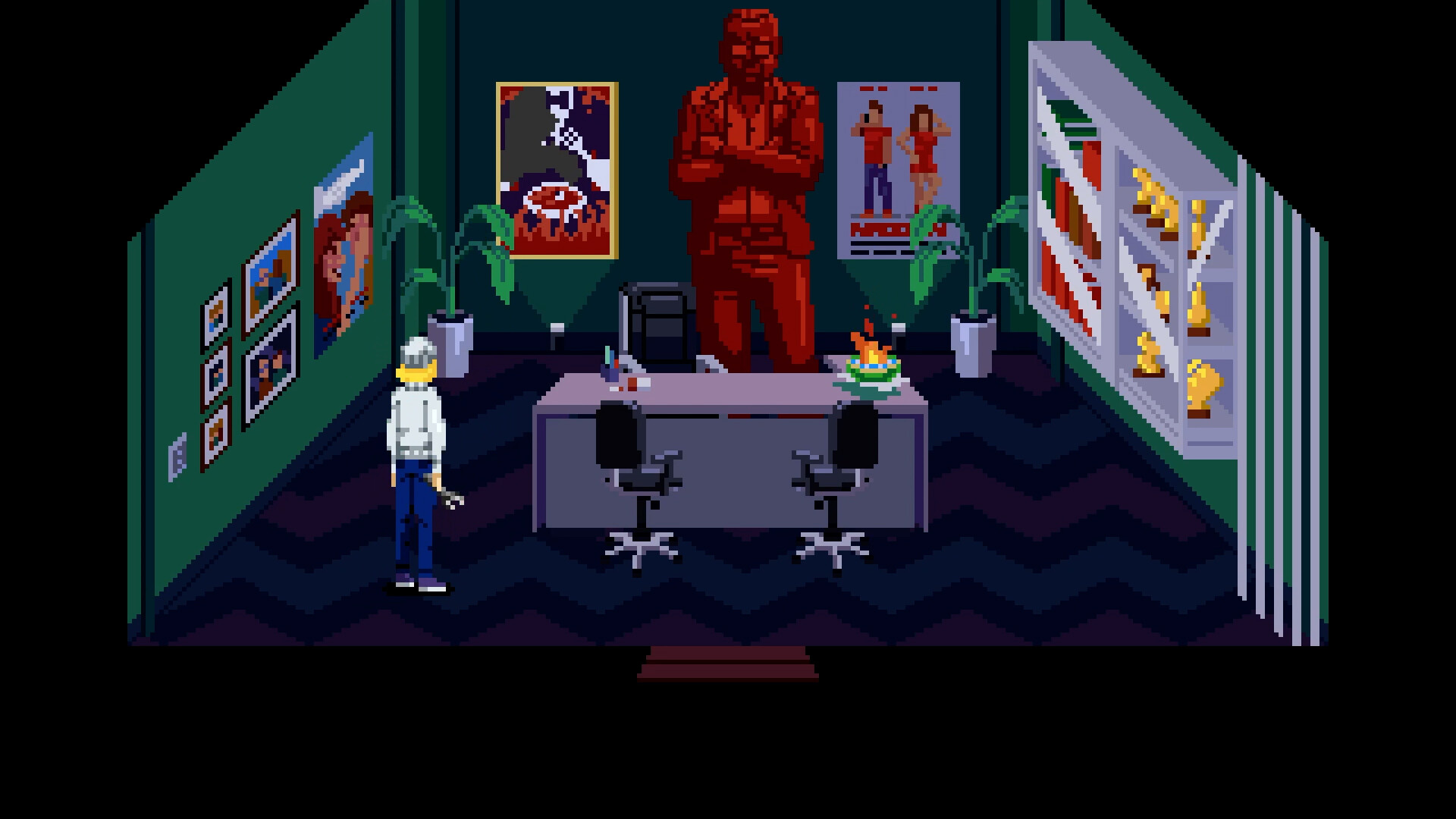
BitSummit put the game in a deliberately ugly corner, across from a fantasy tavern serving drinks and snacks like a pocket Renaissance fair. The contrast was the pitch. One side of the aisle was playful cosplay energy. The other was a prop head, described as a warped human form with flaming, tentacle-like hair, plus a wrecked bed stained with a crimson fluid. Someone, or something, might have been in that bed. The display was doing the same job as a good horror box: it told you the fantasy was domestic, bodily, and already too late.
Official screenshot · Source: Steam store
New Blood Interactive has a catalog built on sharp, often retro-flavored indies. A survival-horror story from that publisher is news even when the only artifact is a booth demo. Fans of psychological horror and stalker games have been living on re-releases and spiritual successors. A new game that names that hunger out loud, then shows a playable slice, is worth parsing carefully.
This Tenebris Somnia preview also shows how little a strong atmosphere needs. The report praises false starts and purposely thin audio. You are not blasted with a stinger every time you open a drawer. You walk, you touch objects, and you assemble a life that already ended badly. That is harder to market in a 15-second clip and easier to feel with a controller in your hands.
| Signal from the booth | What it suggests | What it does not prove |
|---|---|---|
| Grotesque prop head and stained bed | The team wants body horror in the marketing, not just in cutscenes | Final box art or an opening cinematic |
| Placement away from the party booths | Tone is isolation, not festival comedy | How funny or dry the writing stays later |
| Silent Hill and Clock Tower comparisons | Target mood: dread, pursuit, unsafe homes | A copy of either game's systems |
| Short public hands-on only | Enough to judge opening craft | Campaign length, endings, or difficulty |
What the demo actually puts you through
The playable story wastes no time on a safe tutorial town. Julia goes to her ex-boyfriend Ivan's apartment because her dreams have already shown monsters killing him in front of her. Arrival does not confirm the dream. It confirms a struggle. Objects are smashed and scattered. Film canisters are part of the mess. A short film he cared about has been left in the oven to burn. The apartment is both a crime scene and a relationship autopsy.
Progression in the opening is classic adventure design with a nastier texture. A nauseating red liquid seals the main bedroom. Julia cannot just find a key. She has to mix a concoction that burns through the seal, then face whatever that room was hiding. The hands-on frames this as clue-plus-common-sense crafting: look, combine, use. If you like point-and-click gates more than map markers, that is the loop to watch.
Then the demo pulls the floor out. Once you have started to orient yourself, time shifts. The building is similar and wrong. Ivan is still missing. You are not alone. That sequence is the real sales pitch. The first half asks you to read a home. The second half tells you the home is not a stable coordinate. Psychological horror lives in that gap between "I know this room" and "this room is lying."
Weapons enter the fantasy before you can settle into pure sneaking. Julia is not written as someone who accepts death politely. The report says she can find gear to equip, including melee and ranged options, and use them against whatever is sharing the shifted space. A tongue-in-cheek caption on the original write-up mocks a tiny firearm against things that do not look like they care. Read that as tone, not as a damage spreadsheet. Booth demos love underpowered guns because they keep the joke and the fear in the same frame.
One lighter beat cuts through the grime. An interaction involving a candle's supposed scent is played as an absurd, uncomfortable joke. That matters. Unbroken misery gets numbing. A single gross, human laugh tells you the writing may have a pulse.
| Story beat | Player job | Horror function |
|---|---|---|
| Dream of Ivan's murder | Enter the apartment already afraid | Stakes before the bestiary |
| Wrecked rooms and burned film | Search and interpret clutter | Show the relationship without a monologue |
| Red seal on the bedroom | Combine items into a burning mix | Adventure puzzle with a visceral reward |
| Time and layout shift | Relearn a familiar building | Turn knowledge into a liability |
| Unseen or half-seen company | Equip what you find and survive | Move from mystery into pursuit |
How the horror design lines up with genre classics
Calling a game "for Silent Hill and Clock Tower fans" is easy booth language. The useful question is which parts of those traditions the demo actually touches.
Silent Hill, across its best-known entries, mixes a personal guilt story with a place that rots into another world. Clock Tower's classic image is weaker combat and a stalker who punishes hesitation. The BitSummit slice borrows the personal premise from the first tradition and the "something is in here with you" panic from the second. It does not, on this evidence, copy fog, a radio, or a mansion hiding system. Those absences are fine. Spiritual successors get worse when they photocopy icons.
The camera note is more specific than the mood board. The writer describes a Sierra-style perspective: the kind of adventure-game view older PC players associate with character-scale exploration rather than an over-the-shoulder shooter. You still get modern-feeling item use, combination, and equipment. That hybrid is the design risk. Fixed or semi-distant views make halls feel watched. They also frustrate players who want precise aiming. A ranged weapon inside an adventure camera can sing or it can fight the interface. The booth staff recommended a controller and said keyboard and mouse also felt solid. That is a promising sentence, not a control review.
Audio is the other craft tell. Sparse sound and fake-out tension are cheap to describe and expensive to pace. If every closet is empty, players stop flinching. If every closet has a hit, players stop exploring. The hands-on claims the demo threads that needle early. Believe it only for the slice that was played. A 20-minute floor build can be tuned harder than a six-hour campaign.
Community reports and later player experience are not part of this source. There is one published floor account, not a pile of public save files. Until a wider demo or launch build exists, do not treat Discord opinions as balance data.
| Design pillar | Often seen in Silent Hill-style games | Often seen in Clock Tower-style games | Reported in this demo |
|---|---|---|---|
| Setting | Town or otherworld that reflects guilt | Large interior, few safe rooms | Apartment, then a shifted twin of a building |
| Vulnerability | Limited supplies, unclear threats | Hiding, stamina, a persistent pursuer | Armed heroine, but threats still feel oversized |
| Story delivery | Documents, symbolism, voice | Environmental pursuit | Searchable home, relationship debris, dreams |
| Player power | Melee, occasional guns | Very limited fighting | Melee and ranged gear you equip |
| Camera feel | Third-person exploration | Cinematic or fixed frames | Sierra-like adventure view |
Platforms, input, and the gaps in the report
The team told the writer they want a simultaneous launch on PC and a wide set of modern consoles. The names in that conversation were PlayStation 4, Switch 1, and an Xbox label written as "Xbox One X/S." That Xbox phrase does not cleanly match how Microsoft names machines. It may mean a cross-gen plan, a slip of the tongue, or a note taken quickly on a loud floor. Do not preorder around it. Wait until a store page lists SKUs in normal language.
Input guidance is simpler. The demo station pushed a controller. Staff still said mouse and keyboard play well. For a game with both adventure interaction and shooting, that split is the right test. Controller players usually want comfortable inventory use and a stick that can manage panic. Mouse players usually want a cursor that makes combination puzzles obvious and a reticle that does not fight the camera. Neither promise is proven by a booth assurance, but both are worth checking in the first public build you can legally play.
What the May report does not contain is as important as what it does:
- No release date or time window
- No price, edition split, or deluxe-item list
- No ESRB, PEGI, or CERO rating
- No stated campaign length
- No accessibility menu: subtitles size, aim assists, content toggles, or photosensitivity warnings
- No confirmation that the Sierra-like view stays for the whole game
A useful Tenebris Somnia preview separates those blanks from the fiction. Julia, Ivan, the burned short film, the sealed bedroom, the shift, and the early weapons are demo facts as reported. A ship date is not.
| Topic | What the hands-on supports | Confidence | Next place to check |
|---|---|---|---|
| Publisher | New Blood Interactive | High | New Blood Interactive's official site |
| PC plus consoles | Simultaneous plan, several machines named | Medium | Store pages when they exist |
| Exact Xbox hardware | Wording was muddled | Low | Publisher SKU list |
| Controller and mouse | Both claimed playable; pad preferred on the floor | Medium | Your own demo session |
| Combat tools | Melee and guns can be found and equipped | Medium for the demo only | Full weapon list later |
| Street date | Not given | None | Official announcement |
How to judge the next build before you spend
Booth hype decays. A practical way to use this Tenebris Somnia preview is as a checklist for whatever trailer, demo, or store page shows up next. You are not looking for more adjectives. You are looking for whether the opening ideas survive contact with a longer play.
Start with the camera. If a new trailer only shows cinematic close-ups, you still do not know how it feels to walk. Look for ten unbroken seconds of Julia moving through a room, interacting, and turning around. Adventure cameras sell space. Trailers often hide it.
Next, watch the puzzle-to-panic ratio. The bedroom seal is a clean example of an adventure gate: a disgusting obstacle, a crafted solution, a reveal. If later marketing is only chases and muzzle flashes, the point-and-click half may have been a prologue trick. If marketing is only locked drawers, the weapons mentioned on the floor may be rare set pieces. The interesting game is the one that keeps both.
Then test the reality shift. Many horror games announce a dream with a filter and a whisper. This demo reportedly changes the building and the clock, then leaves you hunted. Ask whether a future demo lets you notice the wrongness yourself. A door in the wrong wall is scarier than a subtitle that says "something is wrong."
Use this pass before you buy, especially if you are sensitive to domestic violence imagery, gore seals, or stalking. The premise is an ex's apartment after a dreamed murder and a real struggle. That is intimate subject matter, not a generic zombie mall. A content warning on the store page would be a good sign of respect for the audience. Its absence would be a reason to wait for player experience from people who finished more than a booth shift.
- Replay the story beats in your head and decide which one you actually want more of: the apartment reading, the craft gate, or the chase.
- Ignore side-by-side "scarier than Silent Hill" claims until someone has finished the game.
- Confirm platforms on a primary store, not in a paraphrased show note.
- If you bounce off fixed cameras, do not assume a photo mode or a first-person toggle that nobody promised.
- Treat weapon screenshots as mood. Ammo counts, stagger, and whether fighting is mandatory are still unknown.
| Decision | Lean in if... | Step back if... |
|---|---|---|
| Premise | Breakup horror and unreliable rooms sound good | You want a monster safari with minimal story |
| Interface | Adventure-game views still feel tense to you | You need modern shooter aiming to have fun |
| Violence | Implied struggle and grotesque props are acceptable | You avoid intimate or sexualized-gross horror imagery |
| Purchase timing | You can wait for a dated store page | You are tempted by an unpriced "coming soon" tile |
| Expectations | A short, nasty indie campaign would satisfy you | You need a 20-hour open map to feel you got value |
What the floor report gets right about attention
Show demos are unfair on purpose. Noise, a line behind you, and a child hiding from the booth, as the writer mentioned, all shrink patience. Under those conditions, the game still communicated three ideas quickly: a specific woman with a reason to be there, a space full of readable damage, and a rule change that makes the space unsafe. That is a better first impression than a lore codex.
It also sets a boundary for coverage like this. A Tenebris Somnia preview can map the opening fantasy, the publisher, and the platform intent. It cannot grade combat depth, puzzle fairness, or whether the joke about a sad little gun still lands in hour four. Anyone offering those grades from the May booth slice is inventing them.
If you only remember one image, make it the burned short film in the oven. It is specific. It says Ivan made things, Julia knew which things mattered, and somebody wanted that work destroyed or simply did not care while the room came apart. Monster design can be redesigned late. A detail that personal is usually the spine of the script.
FAQ
What is the Tenebris Somnia preview actually based on?
It is based on a published BitSummit hands-on from May 28, 2026, not on a finished retail copy. The writer played a short slice, described the booth, and relayed what New Blood staff said about platforms and controls. Later builds may change puzzles, weapons, and even how long the opening apartment lasts.
Who is the player character, and what is she trying to do?
You play as Julia. She comes to Ivan's apartment after dreams of monsters killing him. She finds evidence of a fight, burns through a red seal on the bedroom, and then deals with a shifted version of a similar building where she is no longer alone. Finding Ivan is the stated goal. Staying alive becomes the immediate one.
Is the game only a point-and-click adventure?
No. The perspective and item combination recall classic Sierra-style adventures, and the bedroom puzzle is pure adventure logic. The same hands-on says Julia can equip melee and ranged weapons. Expect a hybrid until a longer demo proves the balance.
Which platforms were named, and is there a release date?
The report named PC, PlayStation 4, Switch 1, and an unclear Xbox label, with a hope of launching across those machines together. No release date, price, or rating appeared in that account. Check New Blood's own channels before you trust a calendar screenshot.
Related Guides
Tenebris Somnia Demo Guide: Platforms and Story
Learn what the Tenebris Somnia demo includes on Xbox and PC, from platforms and age rating to a practical first-session plan.
Tenebris Somnia Full Game: Launch Price and What to Know
Tenebris Somnia full game launch guide: Steam price, 20% discount, Deck Verified status, runtime, and early player impressions.
Tenebris Somnia pre order: Editions, Price, Dates
See what the Tenebris Somnia pre order includes: limited physical editions, a $34.99 listing, platforms, bonuses, and 2026 ship windows.
Tenebris Somnia demo walkthrough: every puzzle step
Tenebris Somnia demo walkthrough for the free Steam and Xbox slice: chemical door, wrench fights, and the shifting apartment.
Tenebris Somnia gog: Price, Demo, and DRM Guide
Tenebris Somnia on GOG is $19.99 (20% off) through Oct 30, 2026. Compare the free demo, DRM-free specs, languages, and early reviews.