Tenebris Somnia review: FMV Horror Worth Playing?
A Tenebris Somnia review of FMV cutscenes, survival-horror tension, puzzles, clunky combat, four endings, and who should buy it.
Full-motion video in games usually shows up as a novelty reel, then vanishes once the shooting starts. This Tenebris Somnia review looks at a rarer case: an indie survival-horror game that cuts between chunky pixel corridors and filmed performances without treating either as a gimmick. If you want to know whether the ammo anxiety, the cult mystery, and the actors actually hold together, this Tenebris Somnia review is the practical read before you spend an evening on it.
Release Snapshot and Early Scores
Tenebris Somnia launched on October 16, 2026, for PC via Steam and GOG, Nintendo Switch 2, PlayStation 5, and Xbox Series consoles. You explore a warped apartment building as Julia, a filmmaker, while health and ammunition stay scarce. Filmed cutscenes interrupt the pixel rooms whenever the story needs a human face and a practical-effects sting.
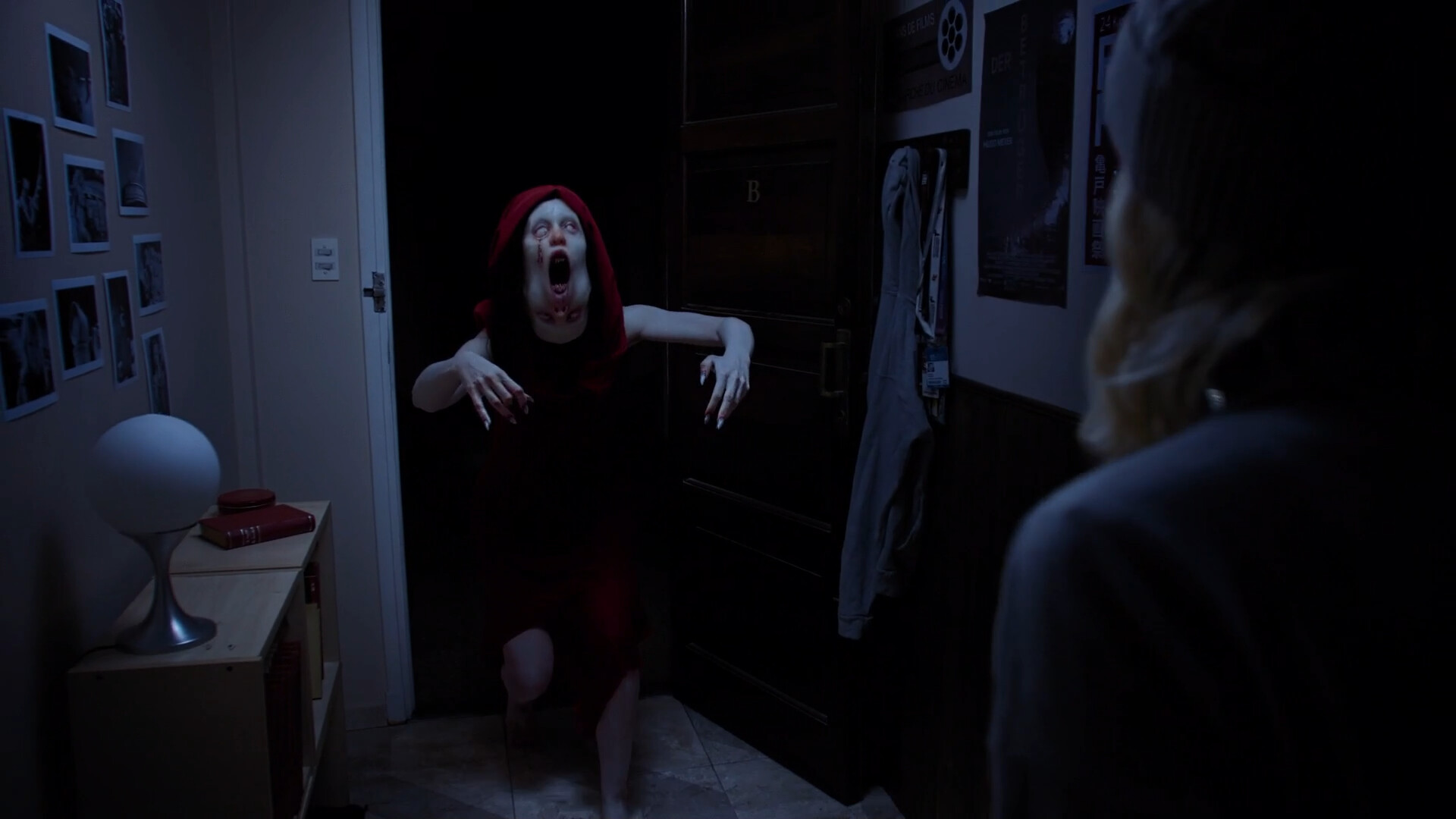
Official screenshot · Source: Steam store
Noisy Pixel's Tenebris Somnia review lands at 9 out of 10. That write-up treats the grotesque filmed scenes and the old-school resource pressure as one piece. Launch coverage from Bloody Disgusting is warmer on story and puzzles than on ordinary fighting, and it does not need a matching number to be useful. Read the enthusiasm and the friction together. A single score hides which half of the hybrid you are actually buying.
| Detail | What early coverage reports |
|---|---|
| Release | October 16, 2026 |
| Platforms | PC (Steam, GOG), Nintendo Switch 2, PlayStation 5, Xbox Series |
| Form | Retro survival horror, adventure-game puzzles, FMV cutscenes |
| Reported length | About nine hours for a deep first run |
| Endings | Four; choices can also change the final boss |
| Cited score | 9/10 (Noisy Pixel) |
| Session shape | One long sitting, or a short weekend plus a second ending |
Use those figures as planning tools, not trophies. One critic finished a full run in a single impromptu session and still felt glued in place. Another saw two of the four endings inside nine hours. That is a dense evening, not a seasonal map, which is why combat irritation matters: you will feel a bad fight immediately, and you will also be done before it can wear out a month.
Publisher-supplied copies were part of that early coverage. That is normal for launch week. The combat split is specific enough (stiff weapons, crowded halls, overlong finales) that it does not read like a press-sheet echo of the trailer.
Story, Grief, and Cult Mythology
You play as Julia, haunted by nightmares of her ex, Ivan, being torn apart by pale, white-eyed humanoids. She still has a key to the apartment they shared. The rooms are wrecked, cult markings are everywhere, and a note written in blood says Ivan joined a group that promised to erase the worst memories of their breakup. That relationship had already collapsed into a severe depressive spiral. The game treats grief, obsession, and creative ego as the real engine. Those themes are story context, not a manual, and the script does not pause to lecture you about them.
Julia tries to leave and is cut off by one of the creatures from her dreams. The building becomes a distorted memory palace. Early stretches recall the hopeful start of the relationship and a short film that actually landed with critics. Deeper floors get uglier as Ivan’s push toward a feature-length movie curdles into something predatory. Julia is not written as a passenger. Coverage keeps singling out her refusal to fold, even when the threats stop making literal sense.
| Story layer | What it does in play |
|---|---|
| Personal history | Stages of grieving a failed relationship, told through Julia and the rooms |
| Creative conflict | Two filmmakers whose drives stop fitting together |
| Cult mythology | Ritual rules get explained without flattening the mystery |
| Environment | The apartment retells the relationship as you descend |
| Endings | Four outcomes; choices also fork the final encounter |
What this Tenebris Somnia review keeps coming back to is restraint in the lore. Plenty of horror explains a cult until the dread turns into a wiki page. Here, new ritual details reportedly pull you forward instead of sanding off the weirdness. Repeating visual motifs make the building feel like one argument told in several dialects. If you like stories about people who cannot separate love from a project, the character work outlasts the monster designs.
Leave the destination alone on a first run. The reported “good” outcome left one critic satisfied with where Julia landed, and you should meet that ending yourself. A second pass is the realistic way to see more than one conclusion. Nine hours was enough for two endings in that session, so completionists are looking at a weekend, not a second job.
Pixel Art, FMV, and the Shared Frame
The presentation is the marketing hook, and it earns the role. Moment-to-moment play sits in nostalgic pixel art with a vulnerability close to the original Clock Tower: you can fight, but you are never comfortable. Cutscenes are full-motion video, with practical-looking gore, uneasy sound, and performances reviewers wanted more of. The trick is the handoff. Hallways stay recognizable when the image jumps from sprites to actors, so the filmed beats feel like the same location rather than a different product bolted on.
Bloody Disgusting’s launch coverage, which is worth watching before you buy if you care about image quality, liked that the footage stays crisp. There is no obligatory VHS grain or fake tape damage. Framing is deliberate, which matters in a format with a long history of stiff, cheap inserts. You can read that piece alongside the Bloody Disgusting launch coverage of Tenebris Somnia and then decide whether the actors match the pixels you actually have to play.
The pre-release worry, voiced outright in the more enthusiastic review, was that spectacle would embarrass the sprites. The opposite happened for that critic. The contrast became the point, and roaming the pixel rooms for clues was enjoyable enough to imagine as its own game. Old-school horror mood, readable spaces, and the simple pleasure of slipping past something awful all survived contact with the filmed scenes.
| Presentation piece | What works | Watch-out |
|---|---|---|
| Pixel exploration | Readable horror spaces and a nostalgic mood | Occasional pixel hunting for hotspots |
| FMV cutscenes | Crisp image, practical effects, deliberate framing | Sets a polish bar combat does not always meet |
| Sound and acting | Unsettling design and nuanced performances | No major acting complaint in early reviews |
| Visual motifs | Repeating symbols keep the cult lore cohesive | Trailers can oversell style relative to fights |
| Tone arc | Grounded opening, then abstract nightmare logic | Late encounters get long as they get stranger |
Trailers will sell you the cast. The session sells you the cut between media. If filmed horror is your only reason to show up, know that most of your time is still scavenging and solving inside the pixel building. That ratio is a feature. The FMV punctuates the night. It does not replace the verbs.
Puzzles, Scarcity, and Combat
On the systems side, this Tenebris Somnia review is really a split verdict, and you should know which half you are buying.
Puzzles that respect dream logic
Puzzles are the agreed strength. Progress is classic adventure logic: find objects, combine them, and use them where the scene is quietly asking. Most solutions are fair. A few depend on vague clues and very specific interactions, but neither major write-up describes a brick wall. One clever set piece has you add and remove liquid from a large glass vessel until striking it produces the same tone as a nearby bell. That is the design target. Dream logic you can still test with your ears and your inventory, tied to the story instead of dropped in as a lock.
Players who usually bounce off adventure games are part of the positive evidence. The more forgiving critique came from a reviewer who often gets stuck in the genre and never hit a “what now?” break here. Critical items are usually visible. The miss is hotspot hunting: a handful of beats ask you to walk the screen and touch nearly everything. Sometimes that sweep hides a heal or a few rounds. Sometimes it is just tedious. It is the cleanest gameplay complaint both the tension-positive and the combat-skeptical reads can share.
Fighting that some love and others endure
Noisy Pixel expected a low-fail point-and-click and got the opposite. Enemies are common. Healing items and ammunition dry up fast. That critic reloaded often after bad trades and sloppy shots, then spent long stretches near death with almost nothing in reserve. The tension never sagged. Bosses are mostly puzzle-fights, not galleries to empty a magazine into. Several took multiple attempts. A couple near the end run long and get frustrating, but checkpoints inside the encounter mean you rarely restart a boss you had nearly finished.
Bloody Disgusting found the same scarcity less charming in ordinary rooms. Melee and guns both feel clunky. You do not need to kill everything, and you probably should not, because the economy will not support a full clear. Dodging still feels stiff. Later, extra enemies show up in places you already walked, so halls clog fast.
Opening a door into three bodies at once reads as friction more than fear. Boss patterns are more ambitious than the controls. Both final-boss options, which depend on your choices, spiked harder than the rest of the game: wild designs, less wild fun. Chase sequences, where you flee instead of dueling, fit the movement model better and feel cinematic. That gap is the whole argument. The toolset likes pursuit and puzzles more than it likes a straight shootout.
| Encounter | How it plays | Practical approach |
|---|---|---|
| Hall monsters | Stiff to fight and costly to wipe out | Slip past when you can; spend ammo on real chokepoints |
| Supplies | Health and bullets are scarce on purpose | Search early; do not hoard for a boss you may skip |
| Puzzle rooms | Item combos and dream-logic devices | Try the obvious interaction, then the strange one |
| Chase scenes | Pursuit instead of a duel | Learn the route; standing still is how they turn grueling |
| Mid-bosses | Puzzle plus attrition, with checkpoints | Solve the gimmick before you optimize damage |
| Final bosses | Two choice-based fights, both spikes | Expect pattern learning; use the checkpoint, do not brute force |
A few habits make the economy feel intentional instead of clumsy:
- Clear only what blocks a puzzle or a safe retreat. A stocked inventory beats a quiet hallway you will never need again.
- When a room feels empty, sweep interactables once. Do it for the hidden supply, then move on. A second lap is where pixel hunting turns into stalling.
- On bosses, name the non-shooting win condition out loud before you retry. Extra attempts go faster once the gimmick is solved, and internal checkpoints protect a near-clear.
- If an encounter is shaped like a chase, play it like one. Planting your feet is how these fights outlast their own idea.
- Save ending curiosity for a second outing. Two outcomes in one nine-hour window is plausible. All four, blind, is not the design.
Limits, and Who Should Buy
The honest friction in this Tenebris Somnia review is structural, not cosmetic. The map is a memory-warped apartment complex: a strong narrative container and a milder survival-horror layout. Fans of dense, interconnected mansions will miss the classic loop of unlocking shortcuts and re-reading a space you now own. The footprint is small enough that getting lost is not the problem. The space simply adds less play than the story it is telling. You remember what a room meant more often than you remember a clever link between wings.
Combat design sits a half-step ahead of combat feel. Gimmick bosses are the right idea for this toolset, and checkpoints show the developers knew the fights would run long. The criticism is that some of those fights stay long after you understand them, and that ordinary crowds ask for evasive grace the controls do not quite have. Skeptical coverage even floats a counterfactual: a chase-and-puzzle game in the point-and-click tradition might have been smoother than a classic survival-horror combat layer. The more enthusiastic coverage disagrees in outcome. Scarce resources and real fail states are exactly why the pixels keep up with the filmed scenes.
| Strength that holds | Paired limitation |
|---|---|
| Cohesive FMV and pixel locations | Trailer polish can oversell the fighting |
| Fair, story-tied puzzles | A few solutions hide behind hotspot searches |
| Real resource anxiety | Full clears are impractical and sometimes clumsy |
| Checkpointed puzzle bosses | Late and final fights outlast the fun of the pattern |
| Surreal memory architecture | Fewer shortcuts than genre-classic mansions |
| Four endings and a forked finale | One blind run will not show the whole argument |
Style over substance was the fear going in. Both detailed reviews reject that fear, including the one that would have preferred fewer gunfights. The writing, the cult’s leftover mystery, and the puzzle craft are doing real work. If you feel a substance gap, it is in the verbs of combat, not in the script.
If you only remember one buying rule from this Tenebris Somnia review, use this matrix instead of a single score.
| If you are… | Expectation to set | Lean |
|---|---|---|
| A horror-movie fan who also plays games | FMV is crisp and acted, not a filter pack | Strong yes |
| A survival-horror traditionalist | Tension and bosses are real; maps are simpler | Yes, with combat caveats |
| An adventure-game purist | Puzzles are the best system; fights are clunky but present | Yes, if you can tolerate them |
| Someone who bounces off stiff melee | Regular enemies and both finales are the risk | Watch a combat clip or wait for a sale |
| A completionist | Four endings, a choice-based finale, modest hours | Good weekend project |
Play the first night blind, accept reloads, and stop when a late boss turns into homework. Come back for the pattern, not for a bigger ammo stack. On a second outing, chase the ending you did not see. That plan fits both the nine-hour report and the one-sitting report. They are the same game at different patience settings.
Taken together, the scored 9/10 and the combat caveats point the same direction: a multimedia horror piece with a real survival spine, a better puzzle game than shooter, and a protagonist worth the descent. Movie fans and horror-game fans are the overlap it was built for. If you need silky combat to enjoy a nightmare, look elsewhere. If you want the nightmare acted, scarce, and finishable, it earns the night.
FAQ
How long is a first playthrough?
Early coverage points to about nine hours for a substantial run, including two of the four endings in one reported session. Another critic finished the game in a single long sitting. Plan on a focused weekend, not a hundred-hour map, and leave a second evening open if you care about the other outcomes.
Are the puzzles unfair dream logic?
Many solutions use dream logic, but reviewers describe them as readable. You combine items, follow environmental hints, and occasionally test a stranger interaction, such as tuning a glass vessel to a bell’s note. Pixel hunting shows up a handful of times. It slows a room down. It does not brick the game.
Why do combat opinions clash so hard?
Because the scarcity works and the controls are stiff at the same time. One view treats low health, fast-empty magazines, and checkpointed puzzle bosses as the surprise highlight. The other sees clunky weapons, crowded halls, and overlong finales as the part that lags behind the puzzles and the FMV. Both are describing the same encounters from different tolerances.
Does this Tenebris Somnia review recommend it for movie-first players?
Yes, with one condition. The filmed scenes are crisp, well framed, and gross in a practical-effects way, and Julia’s story is the reason to stay. You still have to play the building. If roaming, scavenging, and a few grueling bosses sound like the right kind of stress, movie-first players are exactly who this hybrid is for.
Related Guides
Tenebris Somnia demo review: FMV Horror Verdict
A Tenebris Somnia demo review covering FMV horror, scarce ammo, puzzle bosses, and whether the full-game play report lives up to the trailer.
Tenebris Somnia reddit: Horror Game Review Verdict
Tenebris Somnia reddit questions, answered: story strengths, clunky combat, FMV scares, and who should buy this PC horror game.
Tenebris Somnia demo walkthrough: every puzzle step
Tenebris Somnia demo walkthrough for the free Steam and Xbox slice: chemical door, wrench fights, and the shifting apartment.
Tenebris Somnia Demo Guide: Platforms and Story
Learn what the Tenebris Somnia demo includes on Xbox and PC, from platforms and age rating to a practical first-session plan.
Tenebris Somnia switch: Handheld Horror Worth Playing
Decide if Tenebris Somnia switch fits handheld horror: pixels, live-action cuts, map size, and who should buy.