Tenebris Somnia characters: Cast, Roles, and Lore
A clear look at the Tenebris Somnia characters, the nightmare story around Julia, and which cast details are confirmed.
Why the cast is the story you can verify
Tenebris Somnia characters are the quickest way into a survival-horror plot that public write-ups still tell in a handful of sentences. The game reached Nintendo Switch, Nintendo Switch 2, PlayStation 5, Windows, and Xbox Series X/S on October 16, 2026, with Julia at the center: a woman living among evil nightmares who goes to see an ex-boyfriend, never finds him, and slips into a parallel universe where monsters pursue her. If you want to sort the Tenebris Somnia characters without spoiling the campaign, separate the five principal credits from every motive, alliance, and fate that nobody has officially spelled out.
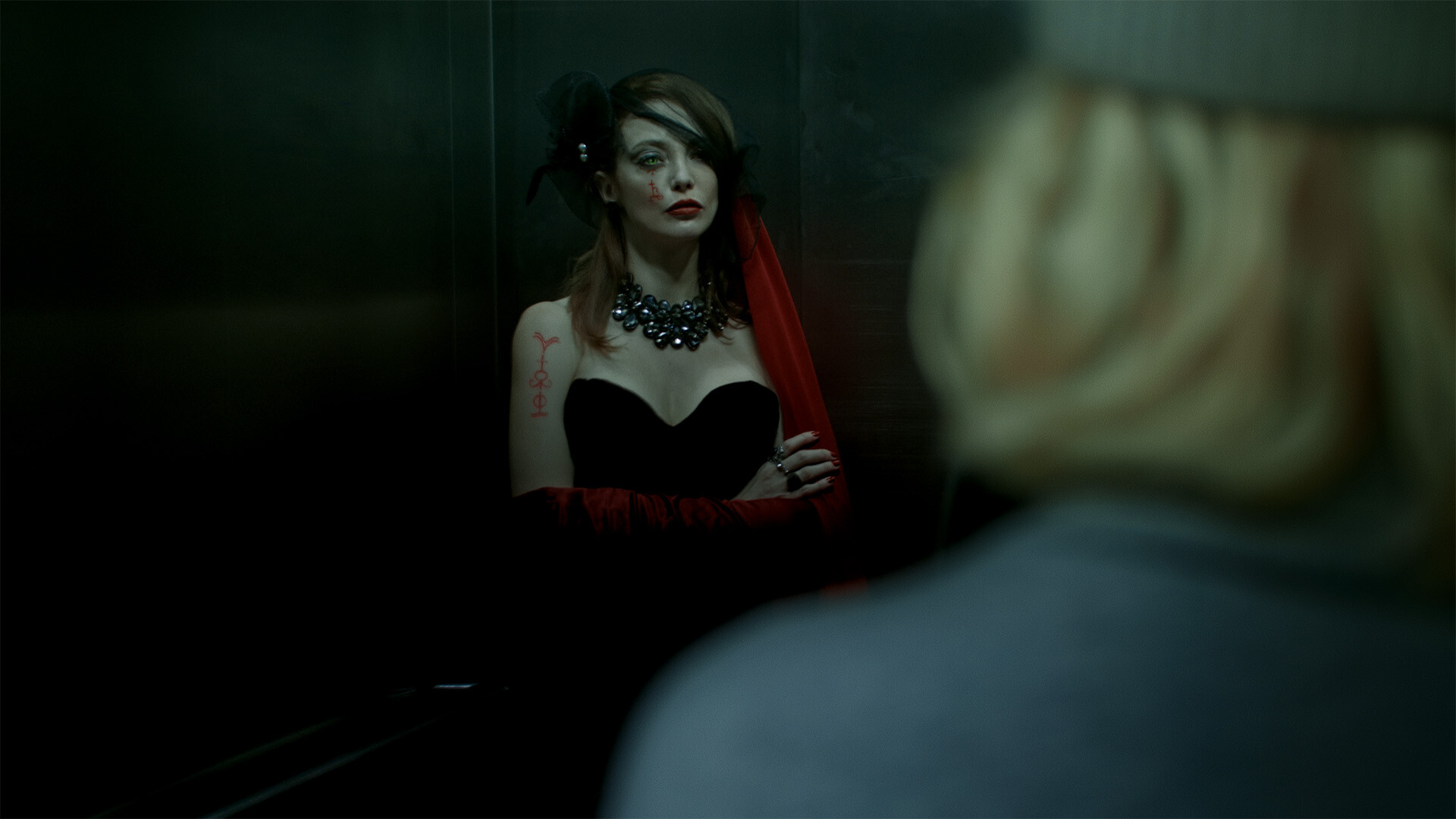
Official screenshot · Source: Steam store
That split matters the day after launch. Players look up names before they look up maps, because a small horror cast is the plot. One person dreams, one absence drives the search, and hostile creatures do the chasing. The credited roles have to sit inside that structure even while most biographies stay unpublished.
A September 2024 Clarín piece framed the project as an '80s-styled horror game tied to special-effects work on When Evil Lurks. That is useful tone context: tangible, nasty imagery rather than a purely digital ghost story. It does not identify side roles, explain the Latin names, or say what anyone wants. Tone is not a character sheet.
Principal cast, counted from the credits
The principal list is short. Five performers are attached to five roles. Only Julia is described in the synopsis. Everyone else is a name you can verify, not a dossier you can quote.
| Performer | Credited role | What the public synopsis actually confirms |
|---|---|---|
| Clara Kovacic | Julia | The woman the story follows; surrounded by evil nightmares; seeks an ex-boyfriend; enters a parallel universe; pursued by monsters |
| Pedro Merlo | Ivan | Performer and role name only |
| Maria Eugenia Rigon | Vitra | Performer and role name only |
| Esteban Prol | Sanguis | Performer and role name only |
| Yael Tesouro | Disfigured woman | A descriptive credit, not a published proper name |
Five principal credits in a single-player horror game usually mean an intimate story, not a crowd. If a guide invents an extra lead, check it against this table before you trust the relationship chart.
The same public summary also supports a few hard counts. These are head counts, not survey results, and they are worth keeping beside any "player experience" thread that sounds more detailed than the credits.
| Published figure | Count | What it limits |
|---|---|---|
| Principal cast credits | 5 | A theory that needs a huge ensemble is ahead of the list |
| Named co-creators | 2 | Andrés Borghi and Tobías Rusjan, with Saibot Studios |
| Platforms in the release note | 5 | Switch, Switch 2, PlayStation 5, Windows, Xbox Series X/S |
| Modes listed | 1 | Single-player only |
| Days after the stated launch, as of this article | 1 | October 16, 2026 launch; this piece is dated October 17, 2026 |
Andrés Borghi and Tobías Rusjan co-created the game in association with Saibot Studios. Development was in Argentina, and New Blood Interactive is the publisher. Some billing shortens the developer line to Borghi and the studio. The fuller credit is the one to use when you are deciding whose interview, if one appears, outranks a forum cast list.
How the premise assigns jobs
Julia is the only fully described lead
Clara Kovacic is credited as Julia, and the story follows her. The nightmares are already the condition she is living in. She is not a blank bystander who wanders into horror by accident. The visit is the hinge: she tries to reach an ex-boyfriend and does not find him. The parallel universe is what she enters instead, and monsters pursue her there.
If you take notes, log every dream, doorway, and doubled version of a familiar person. Those are the devices the premise has already admitted. Her practical goal, so far as print goes, is contact. The failure of that goal is the plot. Anything beyond that — why the nightmares started, whether she chose the crossing, what she is willing to trade — is still unstated.
Ivan is credited, not explained
Pedro Merlo plays Ivan. The synopsis never defines him. The obvious guess is that he is the ex-boyfriend Julia cannot find. That reading fits the shape of the story, and it is still only a reading. Horror credits often name a missing person who stays off screen, or they reveal that the familiar name belongs to someone else.
Keep "Ivan is the ex" in the open-question column. A credit proves the production has a role called Ivan. It does not prove that Julia reaches him, trusts him, or survives him. When early posts draw a relationship chart, label them as community reports unless they describe a scene you can check.
Vitra has a name and no printed function
Maria Eugenia Rigon is credited as Vitra. The name does not appear in the short plot summary. She could be an ally in the other world, a figure from the nightmares, or someone tied to the man Julia went looking for. Any of those jobs would fit a five-person horror cast. None of them is confirmed.
The accurate line is short. Vitra is a principal role. Guides that assign her a weapon, a betrayal, or a family tie are adding material the public summary does not contain. Leave the biography blank until a scene or an official note fills it.
Sanguis is a Latin word, not a published bio
Esteban Prol plays Sanguis. In Latin, sanguis means blood. Horror stories often reserve that word for a predator, a cult title, or a force rather than a neighbor. The dictionary meaning is real. The job description is not. The credit does not call Sanguis a monster, a boss, or a human being.
Use the name as a flag. When the role appears, notice whether people speak it as a personal name, a title, or a label they fear. That distinction will tell you more than the glossary. Do not let etymology stand in for the scene.
The disfigured woman is identified by appearance
Yael Tesouro is listed as the disfigured woman. The credit uses a description instead of a proper name, and some reposts even garble that description. A descriptive credit can mean the character is never named on screen, that a name is being held back, or that the role is a creature identified by how she looks. None of those readings is proven by the cast line.
Write "disfigured woman," name the performer, and skip invented proper names. Appearance is not a personality. Community reports that promote her to a final boss, a victim, or a mirror of Julia are theories until the game says otherwise.
Confirmed facts versus open questions
The safest summary of the Tenebris Somnia characters is still the credit list plus Julia's three story beats. One column below is safe to repeat. The other is where fan pages usually get ahead of the footage.
| Topic | Safe to repeat | Still open |
|---|---|---|
| Julia | Protagonist beset by evil nightmares; the search fails; a parallel universe and pursuing monsters follow | How the nightmares began, and what she must do to leave |
| The ex-boyfriend | Julia goes to him and does not find him | Whether that man is Ivan, someone uncredited, or a figure who appears under another name |
| Ivan | Pedro Merlo is credited in the role | Allegiance, fate, and any relationship to Julia |
| Vitra | Maria Eugenia Rigon is credited in the role | Function: ally, threat, memory, or something else |
| Sanguis | Esteban Prol is credited; the name is Latin for blood | Whether the word is a person, a title, or a force |
| Disfigured woman | Yael Tesouro is credited under that description | Proper name, if any, and what the disfigurement means in the story |
| Monsters | They pursue Julia in the parallel universe | How many are individuals, how many are the same nightmare, and whether any match a credited role |
Two mistakes are easy on day one. The first is treating the synopsis as empty, when Julia's situation is already specific. The second is treating a Latin name, or a credit based on injury, as a full backstory.
The title is another language clue, not a hidden ending. Tenebris points toward darkness, and somnia points toward dreams. "Dark dreams" matches a woman already surrounded by evil nightmares before the other world takes over. A matching title still does not say whether the dreams are that universe, a door into it, or a weapon the monsters use. Play the difference instead of assuming it.
A practical way to track who is who
Tracking Tenebris Somnia characters is easier if you log scenes instead of collecting theories. The campaign is single-player, so nobody is in the room to compare notes while a door opens. A small habit keeps the cast straight.
- Put the five credited roles at the top of a note, with Julia first.
- Under Julia, record dreams, the failed visit, and each crossing into the other world.
- Leave Ivan, Vitra, Sanguis, and the disfigured woman blank until a scene names or shows them.
- Mark every relationship claim as "on screen" or "guess."
- If a post calls itself player experience, ask whether it describes a scene or a theory.
| While you play | Write this down | Do not assume |
|---|---|---|
| A dream sequence | Whose face appears, and whether Julia recognizes it | That every face is a separate living person |
| A search for the ex-boyfriend | The exact name spoken, if any | That the name must be Ivan |
| A new figure | Credit match: Ivan, Vitra, Sanguis, or the disfigured woman | A motive the scene has not stated |
| A hostile pursuit | What the creature wants in that moment | That Sanguis, or the disfigured woman, is automatically that creature |
| A repeated room or double | What changed between versions | That the parallel universe obeys one simple rule |
Platform does not change this list. The release note puts the same single-player game on all five systems as of October 16, 2026. A handheld session and a console session should tell the same story. Be skeptical of a chart that claims a platform-exclusive character. Nothing in the announcement says the cast changes by storefront.
For the compact public record behind those credits, the Tenebris Somnia background page on Wikipedia collects the launch timing reported through Gematsu, the early Clarín coverage, and pointers toward a Steam listing and an IMDb record. Use that page to check spellings. Use the game, not a stub, when you want personalities. An empty or thin character section is a warning: matching paragraphs on unofficial sites can agree with each other without agreeing with the footage. Shared proper nouns from the principal cast are evidence. Shared guesses are not.
Early posts about Tenebris Somnia characters will feel confident because the names are unusual and the premise is sharp. Confidence is not a source. If a detail is not in the credit, the synopsis, or a scene you watched, leave it in the open column until it earns the move.
FAQ
Who are the Tenebris Somnia characters named in the principal cast?
The principal cast credits Clara Kovacic as Julia, Pedro Merlo as Ivan, Maria Eugenia Rigon as Vitra, Esteban Prol as Sanguis, and Yael Tesouro as the disfigured woman. Julia is the only role the short synopsis actually describes.
Is Ivan confirmed as Julia's ex-boyfriend?
No. The story says she visits an ex-boyfriend and does not find him. Ivan is a credited role, and many readers will assume those are the same person. That link is not written in the public cast note, so keep it unconfirmed unless a scene makes it explicit.
What can the names tell you before a full playthrough?
The title lines up with dark dreams, which fits Julia's nightmares. Sanguis is Latin for blood, a common horror signal rather than a published biography. Vitra and the disfigured woman have no definitions in the synopsis, so their labels should not be upgraded into plot facts.
Does the platform change who appears?
The announcement places the same single-player release on Nintendo Switch, Nintendo Switch 2, PlayStation 5, Windows, and Xbox Series X/S. It does not describe platform-exclusive roles. If a guide claims one, ask for a credit or a scene, not a rumor.
Related Guides
Tenebris Somnia Cast: Who Plays Each Role
See the Tenebris Somnia cast, from Clara Kovacic as Julia to Sanguis and Vitra, plus what each credit does and does not confirm.
Tenebris Somnia meaning behind Julia's nightmares
The Tenebris Somnia meaning in plain English: Latin dark dreams, Julia's nightmare plot, cast names, and the October 2026 release.
Tenebris Somnia monsters: story of Julia's hunt
Tenebris Somnia monsters explained from Julia's confirmed chase, not from an invented bestiary.
Tenebris Somnia demo walkthrough: every puzzle step
Tenebris Somnia demo walkthrough for the free Steam and Xbox slice: chemical door, wrench fights, and the shifting apartment.
Tenebris Somnia Demo Guide: Platforms and Story
Learn what the Tenebris Somnia demo includes on Xbox and PC, from platforms and age rating to a practical first-session plan.