Tenebris Somnia meaning behind Julia's nightmares
The Tenebris Somnia meaning in plain English: Latin dark dreams, Julia's nightmare plot, cast names, and the October 2026 release.
A two-word Latin title can tell you more about a horror game than a trailer does. The Tenebris Somnia meaning is the first clue to Julia's story: darkness, dreams, and a chase that does not stay in the waking world. If you searched for the Tenebris Somnia meaning before the October 16, 2026 launch, you were really asking how a classical phrase sets the rules for a single-player survival horror game from Argentina. The short answer is that the title points to dreams bound up with darkness, while the plot sends Julia into a parallel place full of monsters after a visit goes wrong.
Public story detail is still thin compared with the mood of the name. That is useful, not a dead end. When a synopsis is only a few lines long, the title is doing plot work. Read it closely and you will know what kind of fear the game is selling before you memorize a single monster.
How the two Latin words actually work
A precise Tenebris Somnia meaning starts with grammar, not with vibes. Latin builds a phrase out of dictionary words plus endings. Those endings tell you whether a word is the subject, the object, or the setting of the action. Game marketing often flattens that into punchy English. You can still recover the stricter sense in about a minute.
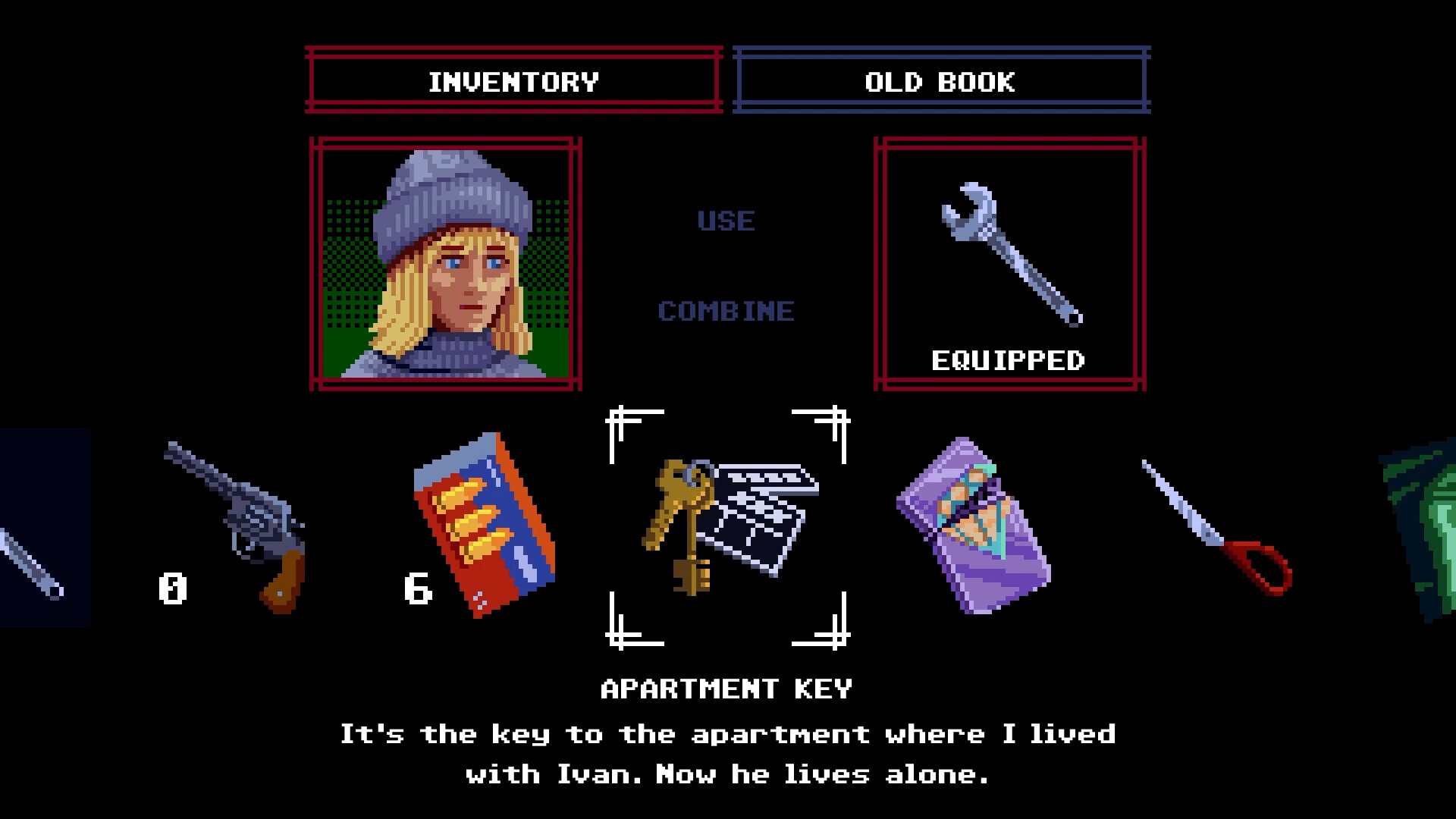
Official screenshot · Source: Steam store
| Latin on the box | Dictionary form | What the ending signals | Plain-English job |
|---|---|---|---|
| Tenebris | Tenebrae, "darkness" | Ablative plural (the dative plural looks the same) | In, by, or from darkness |
| Somnia | Somnium, "a dream" | Neuter plural, nominative or accusative | Dreams, as the thing being named |
| Full phrase | Not a full sentence | No verb | A title image, not a statement |
Tenebrae is one of those Latin nouns that likes the plural even when English wants a singular. Writers used it for physical dark, for the gloom of night, and for the shadow associated with death. The form tenebris is not the "name" form you would look up first in a textbook. It is the form that answers "where?" or "by what means?" So the word is already doing scenic work. Darkness is the place or the instrument, not just a color word pasted in front of a noun.
Somnia is friendlier. Somnium is a dream, sometimes a vain imagining, sometimes a vision with a message. The plural somnia simply means dreams. Classical readers already knew the word from literature. Cicero's Somnium Scipionis, "The Dream of Scipio," is a whole philosophical vision staged as a dream. The game is not citing Cicero. The point is older and simpler: somnia has meant dreams for a very long time, and it does not need a horror filter to get there.
Put the two together and you do not get a neat English adjective-plus-noun on the first pass. A classroom gloss is closer to "dreams in darkness" or "dreams by means of darkness." If the designers had wanted the adjective "dark" to agree with somnia, classical Latin would more naturally have offered something like tenebrosa somnia. They did not. They chose the darkness-noun in the form that locates the dreams inside the dark.
Dark dreams versus dreams in darkness
The looser Tenebris Somnia meaning, the one you will hear in conversation, is simply "dark dreams." That gloss is fair as marketing English. English titles like to be two strong nouns or a noun with a mood adjective. "Dark dreams" is easy to say, easy to remember, and already sounds like horror. It also matches the root tenebr-, which English speakers meet in "tenebrous" and in the old church service called Tenebrae, a liturgy built around the fading of light.
Hold both versions. The conversational one tells you the genre promise. The stricter one tells you the relationship between the two ideas. Dreams are not merely gloomy in color. They sit inside darkness, or darkness is how they arrive. That small shift matters once the story starts moving Julia out of an ordinary visit and into another world.
| Reading | How literal it is | What it promises | Where it can mislead you |
|---|---|---|---|
| Dark dreams | Loose, root-based | Nightmares, dread, sleep logic | Sounds like a mood adjective the Latin does not quite use |
| Dreams in darkness | Tight, case-based | A place of dark where dreams happen | Can sound like a location name only |
| Dreams from darkness | Also allowed by the ablative | Darkness as the source of the visions | Implies an origin the synopsis never spells out |
| Nightmares | Interpretive | Evil dreams, which the story does name | Adds "evil," which is plot, not vocabulary |
None of these four is a spoiler. They are lenses. "Nightmares" is the one the story itself earns, because published descriptions say Julia is surrounded by evil nightmares. The Latin did not have to include a separate word for "evil." The plot supplies that. The title supplies the container: dream plus dark.
A practical test: if a scene could be relabeled "bad memory" or "just a monster attack" with no loss, it is not using the title. If the scene only works because waking life and dream logic share a door, the title is active. Survival horror can scare you with scarcity and pursuit alone. This name says the pursuit should also feel like sleep gone wrong.
How the title lines up with Julia's story
The published story is short, and it should be treated as short. Julia is a woman hemmed in by evil nightmares. She goes to see an ex-boyfriend and does not find him. From that failed visit she enters a parallel universe, and monsters pursue her there. That is the spine available from launch coverage and the game's public summary. Anything past those beats is guesswork.
Nothing in that spine fights the title. A woman already living among evil dreams tries to complete an ordinary errand, a visit to someone she used to love, and the errand fails. The absence is the hinge. She does not get an argument, a reunion, or a closed door with a note. She gets a world next to this one, and that world hunts her. "Dreams in darkness" covers both the nightmares she already has and the parallel place that behaves like a nightmare you can walk through.
| Story beat (public synopsis) | What it confirms | How it echoes the title |
|---|---|---|
| Julia is surrounded by evil nightmares | Dream horror is personal, not a one-off vision | Somnia are already her condition |
| She visits an ex-boyfriend | The plot starts in a human relationship | Waking life still matters |
| She never finds him | The visit fails; absence replaces reunion | The dream-logic gap opens |
| She enters a parallel universe | The setting leaves ordinary space | Darkness as a place, not only a mood |
| Monsters pursue her | Survival-horror pressure, single-player | The dark dreams are hostile, not symbolic only |
Three themes fall straight out of that table.
First, the horror is intimate before it is cosmic. The protagonist is not a soldier dropped into a ruin. She is someone whose nights are already wrong, and whose day goes wrong at the threshold of an old relationship. Titles built on somnia tend to make the inner life porous. You should expect the game to blur what Julia fears with what is actually chasing her, even if the monsters are physically there.
Second, the missing man is a structural hole, not a side quest mention. The synopsis bothers to say she never finds him. That negative result is the plot. In dream stories, the thing you cannot reach is often the real engine. Whether Ivan, the other lead in the billed cast, is that ex-boyfriend is a reasonable audience inference, not a line the synopsis states outright. Until the game names him in that role, keep the inference labeled as an inference.
Third, "parallel universe" is doing a specific job. It stops you from filing the whole game as "it was only a dream" in the cheap sense. A parallel place can use dream rules, dream imagery, and dream fear while still being a location where pursuit is real. The ablative tenebris fits that better than a soft adjective does. She is in the dark, not merely dreaming darkly on a couch.
Argentine coverage ahead of release also tied the project to an eighties horror texture and to co-creator Andrés Borghi's effects background on the film When Evil Lurks. That context does not change the Latin. It does explain why a classical title sits on a game that wants practical, older-feeling dread rather than a modern puzzle-box name. Retro horror often borrows church Latin, medical Latin, or gravestone Latin because those registers already sound like forbidden knowledge. Tenebris Somnia is short enough to fit that tradition without turning into a sentence players must decline.
Cast names that carry the same idea
Sanguis is the cast name that most clearly extends the Tenebris Somnia meaning. In Latin, sanguis means blood. It is a common noun used as a proper name, which is a classic horror move: the person arrives already labeled as a substance. Blood next to dreams-in-darkness suggests injury, kinship, sacrifice, or guilt. It does not tell you which. It tells you the nightmare has a body count vocabulary, not only a ghost vocabulary.
The rest of the billed cast should be handled more carefully. Not every name is a Latin riddle. Inventing a fake etymology for a modern given name makes the title look sillier, not smarter.
| Credited performer | Role as publicly billed | Name note you can actually use |
|---|---|---|
| Clara Kovacic | Julia | Julia is an ordinary Roman name; the protagonist is not linguistically "marked" as a monster |
| Pedro Merlo | Ivan | Ivan is not Latin; do not force a Latin pun. The missing ex-boyfriend link is unstated |
| Maria Eugenia Rigon | Vitra | Vitra is not a standard classical common noun the way sanguis is; treat it as a coined or borrowed name |
| Esteban Prol | Sanguis | Sanguis is Latin for blood; the clearest thematic name in the cast |
| Yael Tesouro | A disfigured woman | Billed by condition, not by a personal name, which already frames her as nightmare imagery |
Julia being unmarked is itself a choice. Players meet a normal name inside an abnormal title. That split supports the synopsis: she comes from recognizable life, and the title's darkness happens to her. Sanguis, by contrast, sounds like he belongs to the other side of the door. Vitra sits in the middle. Until the game defines her, the honest note is negative. She is not "glass" by some mandatory Latin rule, and she is not secretly the word for dream. Over-reading her name will not make the story clearer.
The disfigured woman credit works like a title in miniature. Public materials identify her by damage to the body rather than by a name you could call across a room. That matches monster-pursuit horror, and it matches a dream logic in which people arrive as images of harm. It is also a reminder not to treat the cast list as a plot summary. A billing tells you who was recorded. It does not tell you who survives, who is human, or who only exists inside the parallel world.
Co-creator credits belong in the same careful pile. The game is co-created by Andrés Borghi and Tobías Rusjan, in association with Saibot Studios, developed in Argentina, and published by New Blood Interactive. Those are production facts. They explain the voice of the project, especially Borghi's path through physical screen horror, but they are not hidden inside the Latin words.
What was public by the October 2026 release
By the published date of October 16, 2026, players had a firm release slot and a short story, not a long lore book. June 2026 reporting, including Sal Romano's launch-date piece for Gematsu, locked the day. The Tenebris Somnia overview on Wikipedia gathers that public record: platforms, genre, the Julia synopsis, and the principal cast. Use it as a fact sheet. Do not use it as a scene-by-scene explanation the page does not contain.
| Fact | Public detail |
|---|---|
| Genre | Survival horror |
| Mode | Single-player |
| Release date | October 16, 2026 |
| Platforms | Nintendo Switch, Nintendo Switch 2, PlayStation 5, Windows, Xbox Series X/S |
| Publisher | New Blood Interactive |
| Developers / creators | Andrés Borghi and Tobías Rusjan with Saibot Studios; developed in Argentina |
| Story length in public sources | A compact synopsis, not a full plot breakdown |
That platform list is wide for a moody single-player horror game, from handheld Switch hardware through current living-room machines and Windows. It does not change the meaning of the title. It does tell you the intended audience was never a single storefront. The name had to travel. Two Latin words travel better than a sentence of slang, and they do not spoil the missing ex-boyfriend or the monster chase.
If you want a pre-play checklist that stays inside what is actually known, use this:
- Treat "dark dreams" as the spoken gloss and "dreams in darkness" as the stricter gloss.
- Expect Julia's nightmares to be established before the parallel world, because the synopsis orders them that way.
- Watch the failed visit. The story bothers to say she does not find him.
- Let "parallel universe" block the lazy reading that nothing in the game is physically happening.
- When Sanguis appears, listen for blood as theme: family, violence, or the cost of the dream. Do not decide which ahead of the scene.
- Ignore invented endings, boss lists, and mechanic charts. They are not part of the meaning of the title.
One statistic is worth keeping only because it measures the public text, not fake player data. The core synopsis can be retold in under forty words: nightmares, a visit, an absence, a parallel world, a pursuit. A title that still feels specific after a forty-word plot is carrying weight. Tenebris Somnia does that. It tells you the genre, the texture, and the likely rules of reality without naming a single creature.
There is no reliable pile of post-launch community reports in the source material behind this article, so this piece does not invent player-experience claims about puzzles, difficulty, or secret endings. If you are comparing notes with other players, label those notes as player experience and keep them separate from the Latin and the synopsis. The title's meaning does not depend on a walkthrough.
FAQ
What is the Tenebris Somnia meaning in plain English?
In conversation, it means "dark dreams." More literally, tenebris means "in or by darkness," and somnia means "dreams," so "dreams in darkness" is the tighter gloss. The game's own synopsis adds the horror shade: Julia's dreams are evil nightmares, not neutral sleep.
Does the title spoil the plot?
No. It sets mood and rules. It does not say who the ex-boyfriend is, why he is missing, what the monsters want, or how Julia's parallel universe works. Those beats stay outside the two Latin words. The title only insists that dream and darkness belong together.
Is Sanguis connected to the Latin title?
The name is Latin for blood, and the title is also Latin, so they share a language and a horror register. Public cast lists do not include a biography that proves a specific link. Blood beside dreams-in-darkness is a fair thematic reading, not a confirmed twist.
Who made the game, and when did it come out?
Andrés Borghi and Tobías Rusjan co-created it with Saibot Studios in Argentina. New Blood Interactive publishes it. The release date is October 16, 2026, for Switch, Switch 2, PlayStation 5, Windows, and Xbox Series X/S, as a single-player survival horror game.
Related Guides
Tenebris Somnia Cast: Who Plays Each Role
See the Tenebris Somnia cast, from Clara Kovacic as Julia to Sanguis and Vitra, plus what each credit does and does not confirm.
Tenebris Somnia characters: Cast, Roles, and Lore
A clear look at the Tenebris Somnia characters, the nightmare story around Julia, and which cast details are confirmed.
Tenebris Somnia monsters: story of Julia's hunt
Tenebris Somnia monsters explained from Julia's confirmed chase, not from an invented bestiary.
Tenebris Somnia demo walkthrough: every puzzle step
Tenebris Somnia demo walkthrough for the free Steam and Xbox slice: chemical door, wrench fights, and the shifting apartment.
Tenebris Somnia Demo Guide: Platforms and Story
Learn what the Tenebris Somnia demo includes on Xbox and PC, from platforms and age rating to a practical first-session plan.