Tenebris Somnia monsters: story of Julia's hunt
Tenebris Somnia monsters explained from Julia's confirmed chase, not from an invented bestiary.
Horror marketing loves a monster, but it rarely admits the creature might be the entire plot. That is why Tenebris Somnia monsters are worth separating from generic jump-scare filler: the published story is a pursuit, not a tour of set pieces. If the nightmares around Julia are real enough to chase her, then Tenebris Somnia monsters are the difference between a bad dream and a survival story.
The game, from Andrés Borghi and Tobías Rusjan with Saibot Studios, reached players on October 16, 2026. Public blurbs are still short. They tell you who is running, what she hoped to find, and the kind of world that answers her. They do not hand out a field guide.
That honesty matters on the day after launch. A useful story article should sort confirmed events from guesses before fan wikis harden rumors into settled canon.
What the published story says the creatures do
The synopsis centers on Julia, whose days are already crowded with hostile dreams. She sets out to visit an ex-boyfriend and does not find him. The failed visit becomes a crossing into a parallel universe, and in that place she is hunted. Pursuit is the verb the summary chooses. It is more specific than "spooky things appear."
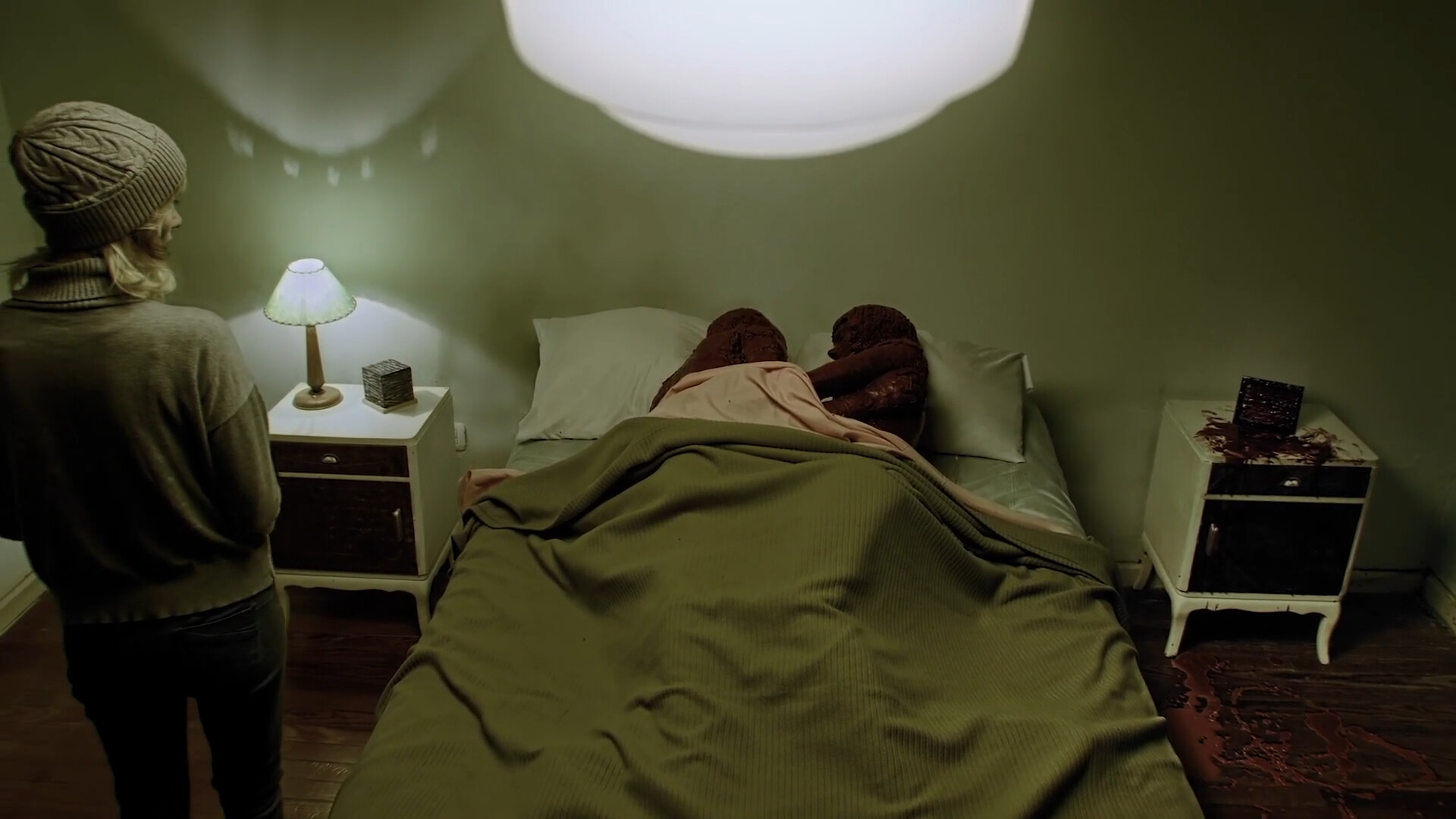
Official screenshot · Source: Steam store
The Latin title supports that mood without adding a creature entry. Tenebris belongs with words for darkness. Somnia is a plural built from the word for dream. A fair gloss is "dark dreams," with the caveat that the publisher ships the Latin title rather than an official English subtitle in the pages reviewed here. Launch copy then tightens the screw. It asks whether the nightmares are merely nightmares. Once a story asks that, a monster can be both a feeling and an obstacle in a hall.
Public pages do not publish a roster of Tenebris Somnia monsters. There is no height chart, no species list, and no confirmed order of encounters in the summaries used here. You can call that gap a mystery. You should not fill it with health bars, weaknesses, or nicknames nobody official has used.
| Story beat | What sources support | What they leave open |
|---|---|---|
| Protagonist | Julia, already surrounded by evil nightmares | When those nightmares started |
| Inciting trip | She visits an ex-boyfriend and never finds him | His name, and whether he is alive |
| Setting shift | She enters a parallel universe | The rule that causes the crossing |
| Threat | Monsters pursue her | How many, what they are called, what they can do |
| Marketing question | Launch copy doubts they are only dreams | Which scares are mental, physical, or both |
Tenebris Somnia monsters belong in that table as the pursuers. They do not belong in a tier list yet. If you see a shape in a clip, describe the shape and the scene. A silhouette is not a species name.
One boundary helps readers. "Parallel universe" means the story claims a second place, not a bedroom dream that ends at sunrise. "Pursued" means the threat is active. Those two words are the whole mechanical hint the synopsis gives: space changed, and something in it gives chase. Weapon advice, stamina numbers, and safe-room maps are a different article, and this source set does not contain them.
Production facts that shape the nightmare
Who made the game does not reveal the bestiary, but it tells you what kind of horror sentence you are reading. This is single-player survival horror, developed in Argentina. Andrés Borghi and Tobías Rusjan are the co-creators, in association with Saibot Studios. New Blood Interactive is the publisher.
Coverage cited from Clarín framed the project as an '80s-flavored game tied to Borghi's special-effects work on the film When Evil Lurks. That background points toward tactile, unpleasant imagery. It is context for taste, not a design document. A practical-effects reputation can make viewers expect damaged bodies and physical props. It cannot tell you how many foes Julia meets, or whether any of them can be stopped.
Timing matters just as much. The release is October 16, 2026, and this article is dated the next day. Trade reporting, including a Gematsu launch note referenced in public citations, aligned on that date. The publisher page presented the game as out everywhere on October 16, pointed players to Steam and GOG, showed PlayStation 5, Nintendo Switch 2, and Xbox Series branding, and promoted physical editions through Lost in Cult. Wider platform lists also include Nintendo Switch and Windows. For story readers, the takeaway is simple: the canon is young.
| Fact | Detail |
|---|---|
| Creators | Andrés Borghi and Tobías Rusjan |
| Studio | Saibot Studios, with development in Argentina |
| Publisher | New Blood Interactive |
| Genre | Survival horror |
| Mode | Single-player |
| Release date | October 16, 2026 |
| Platforms in public lists | Switch, Switch 2, PlayStation 5, Windows, Xbox Series X/S, Steam, GOG |
| Physical editions | Promoted through Lost in Cult |
None of those lines name individual Tenebris Somnia monsters. That silence is data. If a thumbnail promises a complete set of nightmare types, compare it with the New Blood Interactive official Tenebris Somnia page before you trust the count. Official pages can be sparse and still outrank a confident rumor.
Cast names, and what they do not prove
Five principal performers are credited. They prove the story wants faces and voices, not that each name is a monster entry.
| Performer | Credited role | Careful reading |
|---|---|---|
| Clara Kovacic | Julia | The woman the synopsis follows into the other world |
| Pedro Merlo | Ivan | A lead credit; the short synopsis never says he is the ex |
| Maria Eugenia Rigon | Vitra | A named role with no published tie to the chase |
| Esteban Prol | Sanguis | Latin for "blood"; a theme clue, not a combat sheet |
| Yael Tesouro | A disfigured woman | Signals body horror in the casting, not a full creature bio |
None of the five credits functions as a catalog of Tenebris Somnia monsters. Sanguis is the easiest name to overread. Blood-language in a horror title often marks injury, ritual, or a figure obsessed with harm. Any of those could fit, and none is confirmed by the cast list alone. Vitra has even less public definition. Inventing a goddess, a sister, or a final form for that name would be fiction presented as a guide.
Ivan deserves the same caution from the other direction. Players will want the missing ex-boyfriend to match a credited man. The documents used here do not make that match. Until a scene or a longer credit does, "Ivan might be connected to the visit" is a hypothesis. "Ivan is the ex, and he is now monster number three" is a leap.
The disfigured-woman credit should stay similarly plain. Horror often places a human body under stress so the threat feels near, not mythical. Yael Tesouro's listing tells you the production prepared that kind of image. It does not describe what the character wants, whether she pursues Julia, or how her appearance ties to the parallel world. Skip graphic blow-by-blow guesses. They add nothing you can verify, and they blur a role into a hoaxed boss file.
When early posts start swapping theories, label them as player experience or community reports. A route someone finished on October 16 can be true for that route and still miss a branch. Attach the claim to what was seen: a name spoken, a door, a repeated visual. Unattached claims age badly.
How to read the tagline without inventing foes
The launch question is the best analytical tool the marketing gives you. If the nightmares might not be only nightmares, then the story is negotiating reality. Julia does not merely wake up afraid. She changes places, and the things she fears take on the job of hunters.
| Lens | What it can explain | What it cannot prove |
|---|---|---|
| Dream | Distorted faces, broken time, personal guilt | That nothing can hurt her |
| Parallel world | A second set of places with their own rules | The layout or the exit condition |
| Pursuit | Why the plot feels like survival horror | Speed, damage, or stealth stats |
| Named people | Why the fear stays intimate | Which credit is human, ghost, or foe |
| Blood and injury | Why Sanguis and a disfigured role fit the tone | Any specific attack or ending |
Use the lenses in that order on purpose. Goal first, world second, pursuers third, named roles fourth. Reversing it is how empty bestiaries get written. The creatures become the headline, and Julia's failed visit turns into a footnote. The sources do the opposite. They introduce her, the missing man, the other world, and only then the pursuit.
Reading Tenebris Somnia monsters through the tagline means refusing a single bucket. They act external because they chase. They may remain dreams because the publisher will not close the question in a slogan. Horror is allowed to hold both. A thing can start in sleep and still occupy a corridor. What you should not add is a rule the slogan never stated, such as "only true monsters remain after dawn" or "every human face is safe." Those are fan patches.
A verification habit keeps notes usable:
- If the sentence could be checked on the publisher page or the short synopsis, state it as fact.
- If it depends on Latin wordplay, call it a language note.
- If it depends on a stream, mark it as community reports and name the scene.
- If it predicts a weakness or a kill, leave it out until a primary source exists.
That habit is the actionable core. It will not finish the game for you. It will keep your notes from laundering guesses into plot.
A launch-week checklist for the chase
A bestiary you can defend on October 17, 2026, is mostly a set of questions. The list below stays inside the premise the public text supports. It is a log, not a strategy layer.
| Step | What to write down | Why it stays fair |
|---|---|---|
| 1 | What Julia wanted on the visit | Locks the ex-boyfriend beat in place |
| 2 | The first proof this is more than a bad dream | Tests the tagline with a scene |
| 3 | Whether she is chased, watched, or addressed | Stays loyal to "pursued" without new powers |
| 4 | Which credited names appear, and how | Stops Ivan, Vitra, and Sanguis from blending together |
| 5 | Any rule that happens twice | Repetition beats a single shock |
| 6 | What you still do not know | Prevents one session from posing as a full roster |
Three extra checks make the log harder to misuse.
- Prefer the synopsis verb. "Pursued in a parallel universe" is a complete, sourced claim. "Burns in sunlight" is not, unless you watched it and say so as player experience.
- Count only what you counted. "I saw two distinct pursuers before the first hour ended" is a personal tally. "There are eight species" is a statistic you do not have.
- Re-read the publisher page before reposting a name. Launch week is when hoax pages borrow a real title and a real date.
Here is the only numbers set this article will stand behind. The public synopsis features one named protagonist. Credits list five principal performers. The mode is single-player. The release landed on one date across the storefronts and consoles named above. The same sources contain zero creature stat blocks. Zero is not a disappointment to paper over. It is the reason a story article should outrank a fake tier list today.
Until guides catch up, Tenebris Somnia monsters are best discussed as the force that turns Julia's search into a chase. Talk about the failed visit, the second world, and the open question of dream versus place. Add a creature name only when you can point to the scene that spoke it.
FAQ
Are the Tenebris Somnia monsters only dreams?
Julia is described as surrounded by evil nightmares, then as someone hunted after she enters a parallel universe. Marketing asks whether those nightmares are only nightmares. The short public text does not pick an answer. Keep "dream" and "physical threat" both open until the story shows you which rules apply.
Does the plot explain every creature?
No. It explains the situation: a missing ex-boyfriend, a crossed-over world, and pursuit. Individual designs, motives, and outcomes are not in the blurbs behind this article. Scene-by-scene notes from play should be tagged as player experience so they are not mistaken for a studio bible.
Who are Ivan, Vitra, and Sanguis?
They are credited roles: Pedro Merlo as Ivan, Maria Eugenia Rigon as Vitra, and Esteban Prol as Sanguis. Sanguis is Latin for blood, which fits a horror tone and stops there. None of the three is defined as a monster species in the synopsis. Julia, played by Clara Kovacic, is the only person the plot summary clearly follows. Yael Tesouro is additionally listed as a disfigured woman.
Which page should I trust for story updates?
Start with the publisher. New Blood Interactive's game page carries the nightmare question, the October 16 date, and the storefront pointers. Pair it with the platform list and the principal credits when you want to confirm you are reading about this game and not a same-week rumor. If a guide cannot be squared with those sources, treat it as unconfirmed.
Related Guides
Tenebris Somnia Cast: Who Plays Each Role
See the Tenebris Somnia cast, from Clara Kovacic as Julia to Sanguis and Vitra, plus what each credit does and does not confirm.
Tenebris Somnia characters: Cast, Roles, and Lore
A clear look at the Tenebris Somnia characters, the nightmare story around Julia, and which cast details are confirmed.
Tenebris Somnia meaning behind Julia's nightmares
The Tenebris Somnia meaning in plain English: Latin dark dreams, Julia's nightmare plot, cast names, and the October 2026 release.
Tenebris Somnia Trophy Guide: Check Before You Hunt
Blocked list pages mean this Tenebris Somnia trophy guide shows how to verify unlocks yourself instead of guessing a 100% route.
Tenebris Somnia Demo Guide: Platforms and Story
Learn what the Tenebris Somnia demo includes on Xbox and PC, from platforms and age rating to a practical first-session plan.