Tenebris Somnia Story: Julia's Nightmare Explained
Follow the Tenebris Somnia story: Julia's nightmares, Ivan's cult, memory-world puzzles, cast, and four endings explained.
What the Plot Actually Covers
The Tenebris Somnia story starts with a dream Julia cannot wake out of cleanly. She keeps seeing her ex-boyfriend torn apart, then walks into the apartment they shared and never walks back out into the same world, which is why the Tenebris Somnia story matters more than its combat. Players who come for classic survival horror stay because the plot, the cult, and Julia's relationship keep tightening long after the first monster shows up.
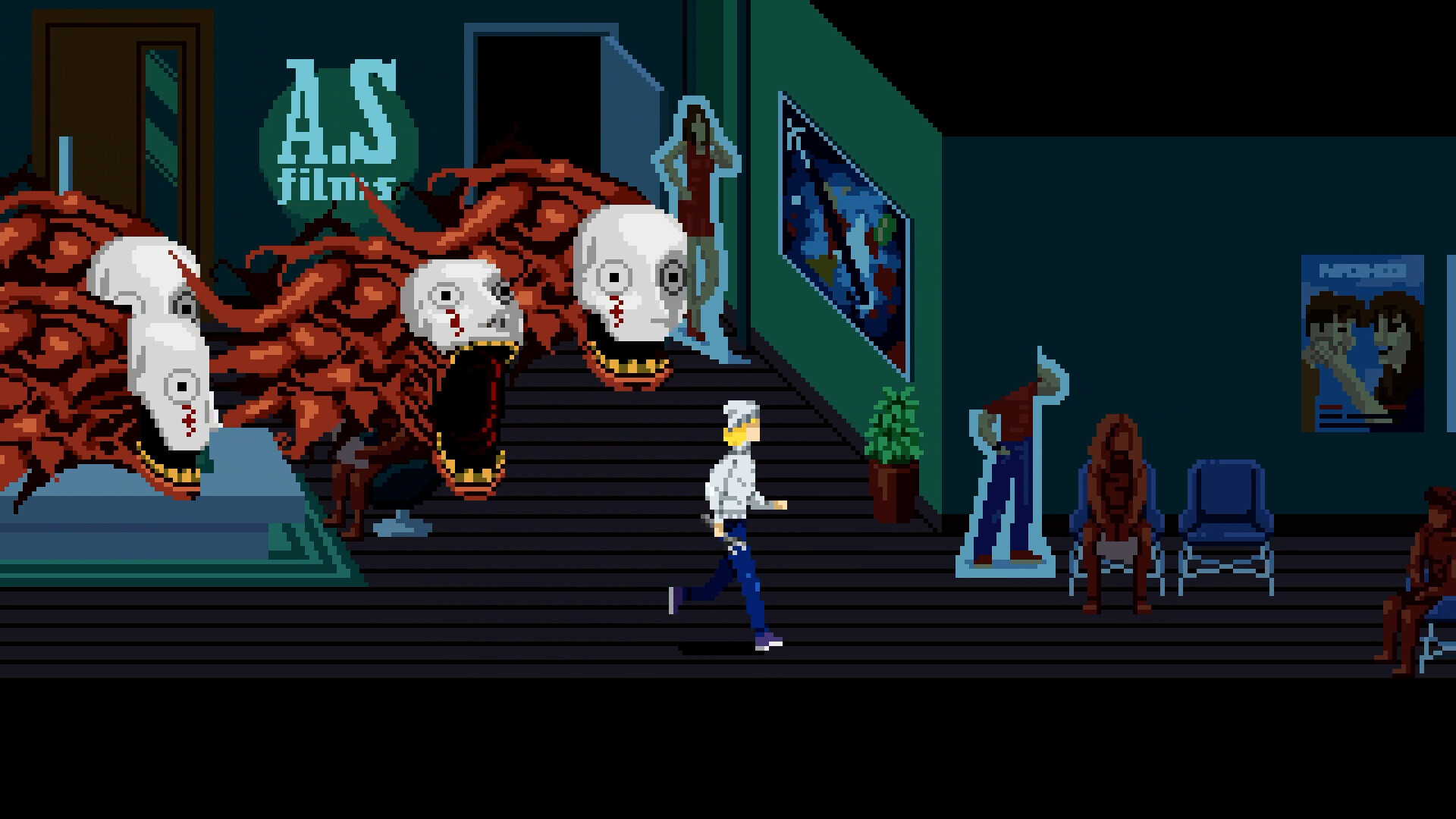
Official screenshot · Source: Steam store
Tenebris Somnia is a single-player survival horror game made in Argentina. Andrés Borghi and Tobías Rusjan co-created it with Saibot Studios, and New Blood Interactive publishes it. The game released on October 16, 2026. The Latin-flavored title points toward dark dreams, and the plot takes that promise literally. Julia is hemmed in by evil nightmares, fails to find Ivan when she checks on him, and is hunted through a place that should not exist.
Public write-ups describe that place from two distances, and both help. A short synopsis calls it a parallel universe full of monsters. A launch review describes a hostile space assembled from what Ivan remembers, warped by a cult he seems to have joined. Read together, this is not a random hell. It is his past, bent by ritual, then turned on the woman who came looking for him.
| Fact | Detail |
|---|---|
| Title gloss | Latin-flavored phrase for dark dreams |
| Protagonist | Julia, already trapped in nightmares |
| Missing person | Ivan, ex-boyfriend, indie filmmaker and movie obsessive |
| Inciting visit | The apartment they used to share |
| Antagonistic force | A cult linked to Ivan, plus roaming creatures |
| Setting | An apartment complex merging with his memories |
| How you progress | Dream-logic puzzles, fights, and a few chases |
| Endings | Four, with two final-boss routes tied to choices |
| Reported length | About nine hours for a critic who saw two endings |
| Mode | Single-player only |
Release notes do not list storefronts in exactly the same way. Separate the lists before you assume a version is missing.
| Where it was listed | Platforms named |
|---|---|
| Reference summary | Nintendo Switch, Nintendo Switch 2, PlayStation 5, Windows, Xbox Series X/S |
| Launch review | PC on Steam and GOG, Nintendo Switch 2, PlayStation 5, Xbox Series |
Nothing in those listings suggests the plot changes by platform. What changes the night is how you move through Julia's search. Taken together, the Tenebris Somnia story is a rescue attempt that becomes a haunting.
Argentine coverage has also tied Borghi to the effects work on When Evil Lurks. That credit does not rewrite this script, but it fits the tone. Bodies fail in ugly ways. The dream is not a soft symbol. It is a place that can show Ivan ripped open before Julia ever reaches the door.
Call the detailed play notes below a published critic's account rather than community reports. Wide player experience is still thin the day after launch.
Julia, Ivan, and the People Around the Cult
Reading the Tenebris Somnia story as a relationship mystery keeps the cast from turning into jump-scare delivery systems. Julia is not a blank camera. She shows up already hurt by the dreams, already bound to Ivan, and already late. She goes back for someone the nightmares have already killed. Every hall then asks a worse question: is she saving him, mourning him, or stepping into a trap he helped build?
Ivan makes independent films and lives inside other people's movies. That work is structural, not decoration. A critic who studied filmmaking wrote that the couple's clashing creative drives sit inside the relationship, and that those tensions pulled harder than expected. The game cares about people who make images and then get eaten by images. His memories become rooms. His taste, his work, and his secrets become problems Julia has to solve.
Full-motion video is how that intimacy reaches you. The scenes are described as clean and carefully framed, with no fake tape grain smeared over the actors. For a plot about people who love cinema, the choice is sharp. The movie inside the horror looks clear. The rot is in what the frames contain, not in a filter pretending the cassette is old.
| Actor | Role | Story function |
|---|---|---|
| Clara Kovacic | Julia | Viewpoint; the nightmares and the search belong to her |
| Pedro Merlo | Ivan | Missing filmmaker whose memories are the map |
| Maria Eugenia Rigon | Vitra | Named principal inside the circle around the mystery |
| Esteban Prol | Sanguis | A blood-coded name that signals cult weight early |
| Yael Tesouro | Disfigured woman | A damaged human figure set among the creatures |
Vitra and Sanguis do not get full public biographies in launch material, so treat them as pressure, not as solved lore. Sanguis especially reads like a title as much as a person. Blood is already the cult's accent before any note spells out a rite.
The review's strongest story praise is that answers do not flatten the mood. The game will show how the cult operates and what the rites are doing, and the dread still holds. Plenty of horror plots either refuse every question or explain the monster into a flowchart. Here, each new fact reportedly pulls you in further. If you like mysteries that respect curiosity, write a name down the first time it repeats. The spell is in the pattern, not in total silence.
A World Built From Someone Else's Memories
Inside that trap, the Tenebris Somnia story keeps the building and the past stuck together. Julia is not touring a house with one ghost attached. She is inside a residential complex that is merging with recollection. Halls behave like memory: familiar, wrong, and stubborn. A "parallel universe" blurb and a "reflections of the past" blurb are the same cage seen from far away and from inside.
Level design is the honest limit on the idea. The space is called nicely rendered and surreal, but it is not the dense, shortcut-laced maze associated with classic survival horror. The footprint is modest. You are unlikely to get badly lost. The map is not the puzzle box. The people are.
That changes what deserves your attention:
- Treat rooms as claims about Ivan, not as nodes to optimize.
- Expect dream logic. The useful question is what the place is trying to remember, not which key matches a door color.
- Track repeated images. The game is credited with a visual language that stays steady while the lore grows.
- Do not wait for a giant castle to unlock the plot. Reveals come from people, rites, and rooms that refuse to stay ordinary.
One puzzle shows the method without needing a full solution. A critic described pouring liquid in and out of a tall glass vessel until a strike rang at the same pitch as a bell beside it. That is dream logic with a physical test, and it felt tied to the fiction instead of pasted on. You do not need an item checklist to feel clever. You need to accept that sound, measure, and ritual can be the same gesture.
| Story layer | What you encounter | What it is doing |
|---|---|---|
| Nightmare | Ivan destroyed by creatures while Julia sleeps | Warning and bait |
| Apartment visit | A real-world check that does not find him | The threshold |
| Memory complex | Halls mixing place and recollection | The playable plot |
| Cult machinery | Rites that stay eerie after they are explained | The cause of the world |
| FMV scenes | Clean, directed performances | Motive and relationship |
| Visual motifs | Images repeated across pixels and video | Cohesion while the map stays small |
Pixel scenes carry the dangerous present. Video carries faces. The split keeps Julia's fear tactile while Ivan's world still looks like something a filmmaker would recognize: framed, intentional, and cruel. That is a reading of the presentation, not a studio manifesto, but it matches how the two styles are described.
Four Endings and a Choice-Driven Last Fight
Late in the Tenebris Somnia story, the route narrows to one of four endings. A reviewer reached two of them in about nine hours and found the "good" ending satisfying because of where it left Julia. That detail matters. The win state is not automatically "Ivan is fine." It is whether her arc lands somewhere that feels earned.
The last fight splits too. Choices open two versions of the final boss. In that playthrough both were much harder than the rest of the game, asking for pattern recognition and reflexes after hours that mostly reward a puzzle brain. You can admire a design and still dislike the duel. That reviewer did: wild silhouettes, long encounters, and controls that do not fully support the choreography.
| Path element | What is confirmed | How to use it |
|---|---|---|
| Ending count | Four | Plan a second look, or keep a late save |
| One critic's session | Two endings in roughly nine hours | The next outcome may not cost nine fresh hours |
| "Good" ending | Left Julia in a place that felt right | Judge success by her arc, not only by survival |
| Final boss | Two options based on choices | The branch can change the fight, not just a cutscene |
| Difficulty spike | Both finales felt harsher than the campaign | Bank resources; puzzle skill may not transfer |
If the plot is the reason you are here, handle the ending like a branch you can revisit:
- Keep a manual save before any late talk or object that feels like a commitment. The last fight changing is proof the branch is real.
- On a first run, follow the reading of Julia and Ivan that you actually believe. A menu will not label the "good" path for you.
- Use a reload or a later run for the other final boss. The designs are part of the pleasure even when the fights run long.
- Do not treat every corpse as a story flag. The supply economy pushes you to skip some fights. Progress is more often a puzzle, a scene, or a chase.
The four outcomes do not have public names or moral scores in the sources used here. What is fair to say is that the fiction is built to be revisited at the ending, not only watched once.
For a scene-level sense of how the relationship and the cult play, Bloody Disgusting's review of the pixel-art and FMV horror game is the clearest launch write-up. It stays light on blow-by-blow spoilers while still judging where Julia ends up.
How Gameplay Carries the Plot
If the Tenebris Somnia story is why you showed up, play it like an adventure game that sometimes panics. Puzzle design is the system that best matches the writing. Challenges use adventure-game reasoning, stay readable even when the logic is dreamlike, and often ask for more than sticking two items together. Several left a seasoned player feeling smart, which is the sensation a mystery wants.
Combat is the weak translator. You get melee and ranged weapons, and the creatures look good, but the fighting is described as stiff. You do not have to kill everything you meet. Later, more enemies show up in places you already passed, and a crowded doorway can strip a chunk of health before the next story beat. Ammo and healing will not fund a cleanup crusade.
Chases fit the fiction better. A few encounters drop the duel and make you flee. Those stretches felt tense and cinematic, closer to the video scenes than the boss fights. Part of the late friction comes from bosses that are more elaborate than the actions you have been practicing.
| Play style | Story value | Risk to the run |
|---|---|---|
| Puzzle-first | Highest; solutions often echo the plot | Low, if you accept dream logic |
| Chase scenes | High; panic without a clumsy duel | Missing a cue can force a retry |
| Skipping extra fights | Saves health for required threats | Old halls get crowded later |
| Killing every enemy | Little narrative gain | Ammo and healing collapse |
| Rushing bosses | You still see the designs | Spikes in length and difficulty |
Story-first habits that do not need a spoiler sheet:
- Let the video scenes finish. Framing and performance carry motives the item text will not repeat.
- When a puzzle feels arbitrary, look for a sensory match: pitch, level, image, or rite. The bell-and-vessel problem is the template.
- Write names down early. Cult rules stay strange on purpose, but they stay consistent.
- If an ambush is blocking a scene, leave, solve the nearby puzzle, and return with a plan instead of emptying the gun.
- Judge the run by Julia's last state, then decide whether another ending is worth the time. Two finales mean the last fight is also a plot choice.
None of this secretly fixes the combat. It shows where the meaning was placed. The monsters are real obstacles. The sentence the game is trying to finish is about Julia, Ivan, movies, and a cult that can explain itself and still feel unclean.
FAQ
What is the Tenebris Somnia story about?
Julia is tormented by nightmares of Ivan, her filmmaker ex, being destroyed by monsters. She returns to their apartment, cannot find him, and enters a parallel world built from his memories after a cult gets hold of his life. You push through that world with puzzles, chases, and fights, then reach one of four endings.
How many endings are there, and do choices matter?
There are four endings. Choices also pick between two final bosses. A critic saw two endings in about nine hours and liked the "good" result for where it left Julia. Keep a late save if you want another outcome without replaying every earlier hour.
Who plays the leads?
Clara Kovacic plays Julia and Pedro Merlo plays Ivan. Maria Eugenia Rigon plays Vitra, Esteban Prol plays Sanguis, and Yael Tesouro plays a disfigured woman. Much of their character work arrives through sharp full-motion video rather than grainy fake found footage.
Does explaining the cult ruin the horror?
Not according to launch criticism. The rites and rules are clearer than in a lot of horror games, and the mystery still holds. New facts reportedly make the situation more gripping instead of smaller. Follow the pattern. The game is not withholding the whole mythology out of laziness.
Related Guides
Tenebris Somnia Cast: Who Plays Each Role
See the Tenebris Somnia cast, from Clara Kovacic as Julia to Sanguis and Vitra, plus what each credit does and does not confirm.
Tenebris Somnia characters: Cast, Roles, and Lore
A clear look at the Tenebris Somnia characters, the nightmare story around Julia, and which cast details are confirmed.
Tenebris Somnia meaning behind Julia's nightmares
The Tenebris Somnia meaning in plain English: Latin dark dreams, Julia's nightmare plot, cast names, and the October 2026 release.
Tenebris Somnia demo walkthrough: every puzzle step
Tenebris Somnia demo walkthrough for the free Steam and Xbox slice: chemical door, wrench fights, and the shifting apartment.
Tenebris Somnia Demo Guide: Platforms and Story
Learn what the Tenebris Somnia demo includes on Xbox and PC, from platforms and age rating to a practical first-session plan.